
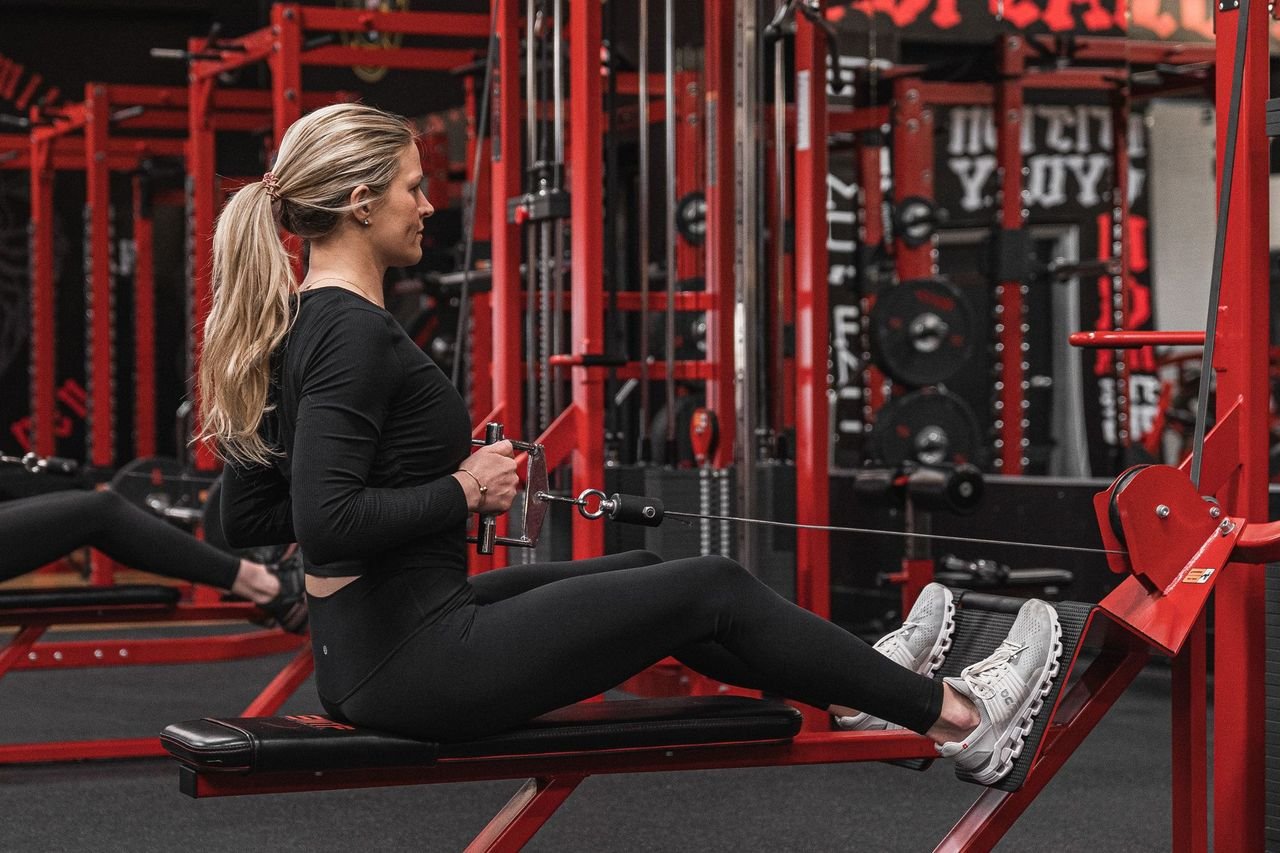
You’ve seen the transformation photos. Women with lean, defined arms. Visible abs. Strong, sculpted legs. Athletic, confident physiques that turn heads.
You want that look. But there’s a fear holding you back.
“What if lifting weights makes me bulky? What if I get too muscular? What if I lose my feminine shape?”
Here’s the truth you need to hear: Lifting heavy weights will not make you bulky. It’s physiologically nearly impossible for most women to build excessive muscle mass through standard strength training.
What strength training actually does for women is remarkable: it builds the lean, defined, strong physique you’ve been pursuing through endless cardio and restrictive dieting. It sculpts your body, increases metabolism, strengthens bones, and creates the confident, capable version of yourself you’ve envisioned.
This guide reveals the complete science of strength training for women: why the “bulky” fear is unfounded, what actually happens when women lift weights, and the exact training framework to build your strongest, leanest, most confident body.
The Biological Reality: Why Women Don’t Get Bulky from Lifting
Let’s address the fear directly with science.
Testosterone and Muscle Building
Building significant muscle mass requires testosterone. This hormone is the primary driver of muscle hypertrophy (growth).
Here’s the critical fact: Women have approximately 5% to 10% of the testosterone levels that men have. This dramatic difference means women build muscle much more slowly and to a much lesser degree than men, even when following identical training programs.
The female bodybuilders and extremely muscular women you might be thinking of have achieved that physique through years or decades of dedicated training, very specific nutrition protocols, and in many cases, performance-enhancing substances. They didn’t accidentally wake up one day looking that way from a few months of squats and deadlifts.
What Actually Happens When Women Lift Weights
When women engage in progressive strength training, the adaptations are remarkable and desirable:
Muscle becomes more defined and toned (but not significantly larger) Body fat decreases, revealing the muscle definition underneath Metabolism increases because muscle is metabolically active tissue Bone density improves, reducing osteoporosis risk dramatically Posture improves from stronger back and core muscles Functional strength increases, making daily activities easier Confidence and mental health improve significantly
This combination creates the lean, athletic, defined physique most women are actually pursuing.
The “Toned” Look Women Want Is Built with Weights
Here’s something critical to understand: When women say they want to be “toned,” what they actually want is visible muscle definition with low body fat.
You can’t achieve this through cardio alone. Cardio burns calories but doesn’t build the muscle that creates shape and definition.
The lean, sculpted arms, defined shoulders, shaped glutes, and visible abs you see on fit women are all results of consistent strength training combined with proper nutrition.
Those physiques aren’t created in spin classes or through running. They’re built in the weight room with progressive resistance training.
What Women Actually Experience from Strength Training
Real results from consistent strength training (12 to 20 weeks):
Clothes fit better even if weight stays similar (muscle is denser than fat) Arms and shoulders become defined without becoming “big” Legs become shapelier and firmer with visible muscle tone Glutes lift and round (this is what “building the booty” actually means) Core becomes tighter and flatter from strengthened abdominal muscles Posture improves dramatically, making you look taller and more confident Energy increases throughout the day Confidence and mental strength improve from feeling physically capable
This is the reality of strength training for women, and it’s nothing like the “bulky” fear suggests.
The Complete Strength Training Framework for Women
Here’s the exact approach to build lean, defined muscle and transform your physique:
Framework Component 1: Resistance Training Frequency and Split
Optimal training frequency for women: 3 to 4 days per week
This provides sufficient stimulus for muscle building and strength gains while allowing adequate recovery.
Recommended training split:
Option 1: Full Body (3 days per week) Monday: Full Body Wednesday: Full Body
Friday: Full Body
Best for: Beginners, busy schedules, maximizing efficiency
Option 2: Upper/Lower (4 days per week) Monday: Upper Body Tuesday: Lower Body Thursday: Upper Body Friday: Lower Body
Best for: Intermediate lifters, maximizing muscle building
Option 3: Push/Pull/Legs (3-4 days per week) Monday: Push (chest, shoulders, triceps) Wednesday: Pull (back, biceps) Friday: Legs (quads, hamstrings, glutes)
Best for: Targeting specific muscle groups, advanced training
All three approaches deliver excellent results. Choose based on your schedule and preferences.
Framework Component 2: Exercise Selection for Female Physique Goals
Your program should emphasize compound movements that build total body strength and muscle:
Lower Body Focus (Glutes, Legs):
Squats (back squat, front squat, goblet squat) – builds entire lower body Deadlifts (conventional, Romanian, trap bar) – strengthens posterior chain, builds glutes Lunges (reverse lunge, walking lunge, Bulgarian split squat) – sculpts legs and glutes Hip Thrusts – directly targets glutes for shape and strength Leg Press – safely loads lower body with heavy weight
Upper Body Focus (Arms, Shoulders, Back):
Bench Press (barbell, dumbbell, incline) – builds chest and arms Rows (barbell, dumbbell, cable) – builds back width and thickness Overhead Press (barbell, dumbbell) – sculpts shoulders and builds strength Pull-Ups / Lat Pulldowns – creates back definition and arm tone Bicep Curls and Tricep Extensions – defines arms
Core Focus:
Planks (front, side) – strengthens entire core Dead Bugs – builds core stability Hanging Knee Raises – targets lower abs Pallof Press – builds anti-rotation strength
These movements build the lean, defined, athletic physique women pursue.
Framework Component 3: Rep Ranges and Sets for Women
Many women have been told to use light weights for high reps (15 to 20+ reps per set). This is outdated advice.
Optimal rep ranges for building lean muscle and strength:
Primary compound movements: 6 to 12 reps per set Accessory movements: 10 to 15 reps per set Core work: 10 to 20 reps or timed holds
Total sets per muscle group per week: 10 to 18 sets
Example weekly volume for glutes: 3 sets squats (2x per week) = 6 sets 3 sets hip thrusts (2x per week) = 6 sets 3 sets Romanian deadlifts (1x per week) = 3 sets Total: 15 sets per week for glutes
This volume drives muscle building and definition without excessive fatigue.
Framework Component 4: Progressive Overload for Women
Women respond to progressive overload exactly like men: gradually increasing demands forces adaptation.
How to progress your training:
Weeks 1-3: Establish baseline weights, focus on form Weeks 4-6: Increase weight by 2.5 to 5 pounds when completing all reps with good form Weeks 7-9: Continue progressive weight increases or add reps (if stuck at a weight, add 1-2 reps per set) Week 10: Deload week (reduce weight and volume by 30 to 40%) Week 11+: Begin next progression cycle
Example progression for Squats:
Week 1: 95 lbs x 3 sets x 8 reps Week 3: 100 lbs x 3 sets x 8 reps Week 5: 105 lbs x 3 sets x 8 reps Week 7: 110 lbs x 3 sets x 8 reps
This systematic progression builds strength continuously and creates the physique changes you want.
Framework Component 5: Nutrition Strategy for Lean Muscle Building
Training creates the stimulus. Nutrition provides the building blocks and energy for transformation.
Protein Requirements:
Target: 0.8 to 1g per pound of goal body weight daily
For a woman with 140-pound goal weight: 112 to 140g protein daily
This protein level supports muscle building, recovery, and satiety.
Calorie Strategy:
For fat loss with muscle preservation: 300 to 500 calorie deficit with high protein For muscle building (recomp): Maintenance calories or slight surplus (100 to 200) with high protein For maintenance: Maintenance calories with adequate protein
Most women pursuing the lean, defined look should eat at maintenance or slight deficit while prioritizing protein and training consistently.
Carbohydrate and Fat:
Carbohydrates fuel training performance – include adequate carbs around workouts Healthy fats support hormonal health – include 0.3 to 0.4g per pound body weight
Strategic nutrition supports your training and accelerates physique transformation.
BOOK YOUR FREE PILOT SESSION NOW
Women-specific strength training requires programming designed for female physiology and goals. At Vantage Elite Fitness, we specialize in helping women build lean, strong, defined physiques through strategic resistance training and nutrition.
Vantage Elite Fitness – Book Your Free Strategy Pilot Call and Session
Framework Component 6: Managing Your Menstrual Cycle and Training
Women have a unique consideration men don’t: hormonal fluctuations throughout the menstrual cycle affect training performance, recovery, and energy.
Understanding these patterns helps optimize training:
Follicular Phase (Days 1-14, starting with menstruation):
Estrogen rises throughout this phase Energy and strength typically increase Recovery capacity is higher
Training approach: This is an excellent time for heavy lifting, progressive overload, and high-intensity training. Push your limits during this phase.
Ovulation (Around Day 14):
Estrogen peaks just before ovulation Strength and power often peak here
Training approach: Maximize intensity. This is often when women hit PRs (personal records) and feel strongest.
Luteal Phase (Days 15-28, before next menstruation):
Progesterone rises, estrogen decreases Energy may decrease slightly Body temperature increases slightly Some women experience reduced strength and increased fatigue
Training approach: Maintain training but listen to your body. Focus on moderate intensity rather than maximal efforts. This is a good time for volume work (more reps, same weight) rather than heavy singles.
Menstruation (Days 1-5):
Hormones are lowest Some women experience fatigue, cramps, or low energy
Training approach: Training is absolutely safe and often helpful during menstruation (it can reduce cramps and improve mood). If energy is lower, reduce intensity slightly but maintain consistency.
Key insight: These patterns vary significantly between women. Track your own patterns and adjust training based on your body’s responses.
Common Concerns Women Have About Strength Training
Concern 1: “I don’t want to look masculine”
Building a masculine physique requires: Male levels of testosterone (which women don’t have) Years of dedicated training with very specific goals Often performance-enhancing substances
Standard strength training for women creates feminine, athletic, defined physiques, not masculine ones. You’re building the body you see on fit, lean women, not male bodybuilders.
Concern 2: “What if my legs get too big?”
Building significant leg size requires: Intentional training specifically designed to maximize leg growth Very high volume (20+ sets per muscle weekly) Calorie surplus for extended periods
Most women actually lose leg size while strength training because they’re losing fat while building modest muscle, resulting in leaner, more defined legs.
Concern 3: “I prefer cardio, can’t I just do that?”
Cardio is excellent for cardiovascular health and burns calories, but it doesn’t build the muscle that creates shape and definition.
The lean, toned physique you want requires muscle. You build muscle through resistance training, not cardio.
Optimal approach: 3 to 4 days strength training, 1 to 2 days optional moderate cardio.
Concern 4: “I’m afraid I’ll gain weight”
Initially, you might gain 1 to 3 pounds as your body builds muscle and retains slightly more water for recovery. This is normal and temporary.
Within 4 to 8 weeks, most women notice clothes fitting better, body composition improving dramatically, and either weight decreasing or staying stable while physique transforms.
The scale is not the best metric. Use progress photos, measurements, how clothes fit, and strength increases as your primary indicators.
Concern 5: “Won’t strength training make me stiff and inflexible?”
The opposite is true. Proper strength training through full range of motion actually improves flexibility and mobility.
Deep squats improve hip and ankle mobility Overhead pressing improves shoulder mobility Deadlifts improve hamstring flexibility
Include proper warm-ups and mobility work, and you’ll become more flexible, not less.
Why Women Benefit from Working with Fitness Trainers
Women face unique challenges and considerations in strength training that benefit enormously from professional guidance.
Working with a fitness trainer near me provides:
Programming Designed for Female Goals: Your program targets the areas women typically want to develop: glutes, legs, shoulders, arms, core, with appropriate volume and exercise selection.
Form Coaching: Proper form maximizes results and prevents injury. Trainers ensure you’re executing movements correctly, especially on complex lifts like squats and deadlifts.
Confidence Building: Many women feel intimidated in the weight room. Trainers provide the confidence and knowledge to train effectively without hesitation.
Cycle-Aware Programming: Trainers can adjust training intensity based on your menstrual cycle patterns, optimizing results and managing fatigue intelligently.
Nutrition Guidance: Women often need specific guidance on eating enough to support muscle building while achieving body composition goals.
Accountability and Support: Consistent execution is critical. Trainers provide weekly accountability, celebrate progress, and adjust programming based on your response.
Most women achieve dramatically better results working with professional trainers compared to self-directed training, especially when starting strength training.
Real Transformation: Women and Strength Training
A 32-year-old client came to Vantage Elite Fitness frustrated after years of cardio classes and restrictive dieting with minimal results. She wanted lean, defined arms, visible abs, and shapelier legs but feared weights would make her bulky.
Her trainer designed a women-specific strength training protocol:
4-day upper/lower split emphasizing progressive overload Focus on compound movements: squats, deadlifts, bench press, rows 12 to 15 sets per muscle group weekly Protein target: 120g daily Minimal cardio (2 optional sessions weekly)
Results over 16 weeks:
Body weight stayed nearly identical (142 lbs to 140 lbs) But body composition transformed dramatically: Arms became defined with visible muscle tone Legs leaned out while becoming more shapely Glutes lifted and rounded significantly Visible ab definition appeared for first time Strength increased dramatically: squat from 65 lbs to 145 lbs, deadlift from 95 lbs to 185 lbs
The transformation wasn’t about the scale. It was about building the lean, strong, confident physique she’d always wanted but couldn’t achieve through cardio alone.
This is the power of proper strength training for women.
Your Strength Transformation Starts Now
You don’t need to fear weights. You don’t need to spend hours on cardio machines hoping for the lean, defined body you want.
You need strategic strength training that builds muscle, burns fat, and creates the athletic, confident physique you’ve been pursuing.
The framework is clear:
3 to 4 days resistance training weekly Compound movements that build total body strength Progressive overload that continuously challenges your body Adequate protein to support muscle building and recovery Strategic nutrition aligned with your body composition goals
At Vantage Elite Fitness, we specialize in strength training for women who want to build lean, defined, strong bodies without the “bulky” outcome they fear (which won’t happen anyway).
We design women-specific programs that target your goals, teach proper form, provide accountability, and guide you through the transformation you’ve been pursuing through less effective methods.
BOOK YOUR FREE PILOT SESSION NOW
Our complimentary Pilot Strategy Session assesses your current fitness, discusses your specific goals and concerns, and designs your personalized strength training protocol for building lean muscle and strength.
Stop fearing weights. Start building the body you want.
Vantage Elite Fitness – Book Your Free Strategy Pilot Call and Session
Because the right fitness coach near me understands women’s specific goals. They design programs that build lean, strong, defined physiques, not bulky ones.
FAQ: Strength Training for Women
Will lifting heavy weights make me bulky?
No. Women have 5% to 10% of male testosterone levels, making it physiologically nearly impossible to build excessive muscle. You’ll build lean, defined muscle that creates the toned look you want.
How heavy should I lift?
Heavy enough to challenge you within the prescribed rep range. If the program calls for 8 reps, choose a weight where reps 7 and 8 are difficult but achievable with good form. This is how you build strength and definition.
Should women train differently than men?
The fundamental principles are the same: progressive overload, compound movements, adequate volume. Women may emphasize certain areas (glutes, for example) more than typical male programming, but the training approach is similar.
Can I build muscle while losing fat?
Yes, especially if you’re newer to strength training. This is called body recomposition: simultaneous fat loss and muscle building. It requires adequate protein, progressive training, and strategic nutrition.
How long before I see results?
Strength increases within 2 to 4 weeks. Visible physique changes appear around 6 to 8 weeks. Significant transformation requires 12 to 20 weeks of consistent training and nutrition.
What if I gain weight when I start lifting?
Initial weight gain (1 to 3 pounds) is normal from increased muscle glycogen and water retention. Within weeks, body composition improves dramatically even if scale weight stays similar. Use photos and measurements, not just the scale.
Do I still need cardio?
Cardio is optional for cardiovascular health but not required for building the lean, defined physique you want. 1 to 2 moderate cardio sessions weekly is sufficient. Prioritize strength training.
Can strength training help me lose stubborn fat?
Yes. Building muscle increases metabolism, making fat loss easier. The combination of strength training and proper nutrition is the most effective approach for reducing body fat while improving physique.
Should I work with a trainer?
Highly beneficial, especially when starting. Trainers provide proper form coaching, confidence in the weight room, customized programming, and accountability. Most women achieve better results faster with professional guidance.
What about training during my period?
Absolutely safe and often beneficial. Training can reduce cramps and improve mood. If energy is lower, reduce intensity slightly but maintain consistency. Many women train through their entire cycle without issues.
Vantage Elite Fitness: Your Strength Training Partner
Women deserve strength training programs designed specifically for their goals, physiology, and concerns.
At Vantage Elite Fitness in Dallas Design District, we specialize in helping women build lean, strong, defined bodies through strategic resistance training that delivers the physique you want without the “bulky” outcome you fear.
Your complimentary Pilot Strategy Session designs your personalized strength training protocol and addresses any concerns you have about starting.
Build the lean, strong, confident body you want.
Strong. Lean. Defined. Confident.