
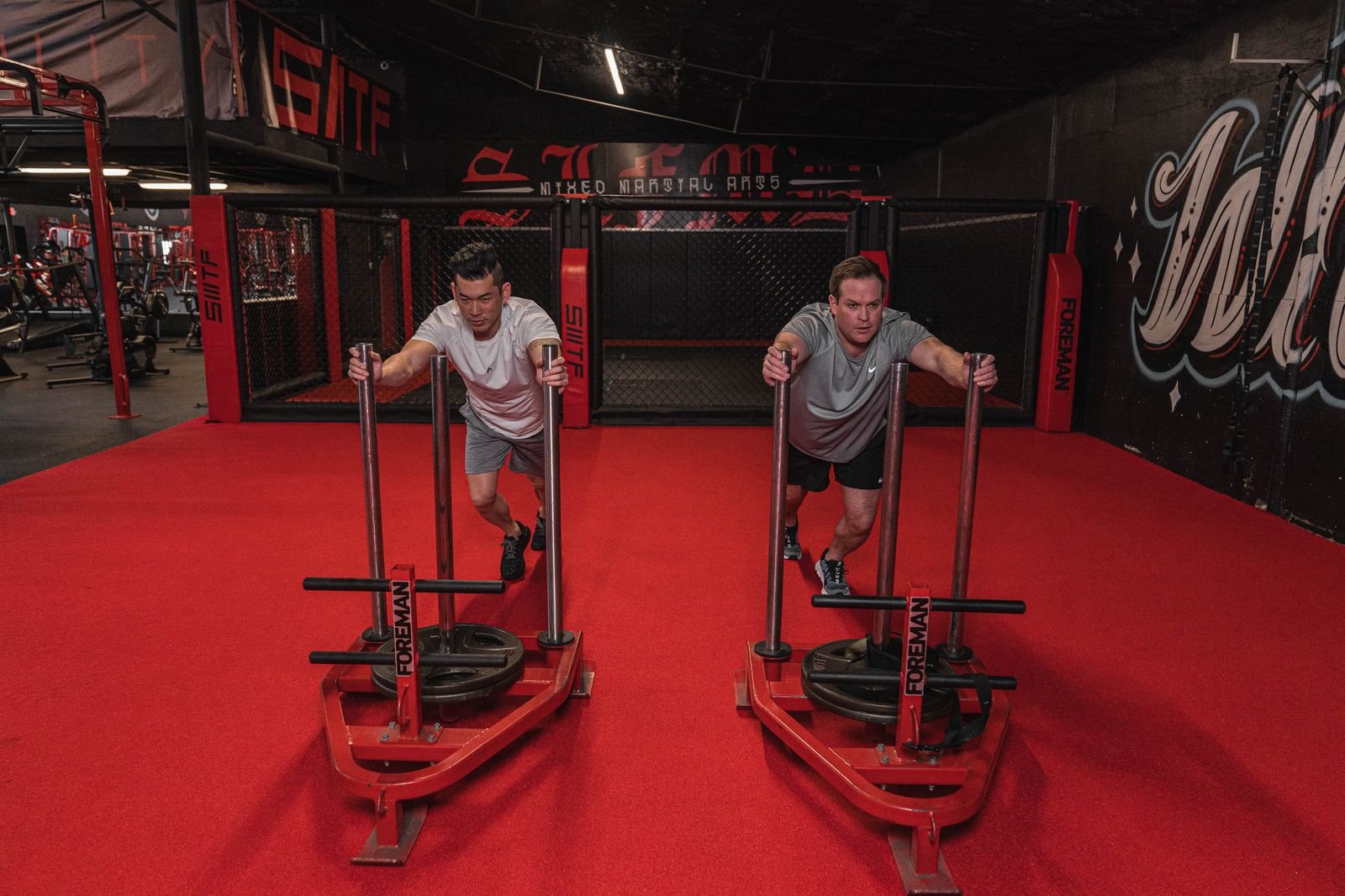
It’s January 2026. You’ve committed. This is your year. You join a gym, buy new workout clothes, meal prep for the week. You’re motivated, excited, ready to transform.
By February 15th, you’ve missed more workouts than you’ve attended. The meal prep stopped. The motivation evaporated. Another year, same outcome.
This isn’t a failure of willpower. It’s a failure of strategy.
92% of New Year’s fitness resolutions fail by mid-February. Not because people lack desire or commitment, but because they approach transformation the same way everyone else does: with motivation instead of systems, intensity instead of sustainability, and hope instead of strategy.
This guide reveals exactly why New Year’s fitness resolutions fail predictably, what actually creates lasting transformation beyond February, and the complete framework to make 2026 the year your fitness resolution finally sticks.
Why New Year’s Fitness Resolutions Fail So Predictably
The pattern is consistent. January 1st: packed gyms, sold-out fitness classes, surge in personal trainer searches. February 1st: empty parking lots, canceled memberships, abandoned goals.
This isn’t coincidence. It’s predictable psychology and flawed strategy.
The Motivation-Only Approach
Most people start their fitness resolution fueled entirely by motivation. New Year motivation feels powerful. You’re excited about change, visualizing results, committed to transformation.
But motivation is temporary. It lasts days, maybe weeks. When work stress increases, when weather turns cold, when initial excitement fades, motivation disappears. And when motivation goes, so does the resolution.
Real fitness transformation doesn’t rely on motivation. It relies on systems, habits, and strategic planning that work regardless of how you feel on any given Tuesday in February.
The All-or-Nothing Mentality
January 1st: “I’m going to the gym six days per week, eating perfectly clean, cutting all sugar, and losing 30 pounds by March.”
This extreme approach feels empowering initially. But it’s unsustainable. Life happens. You miss one workout and feel like you’ve failed. You eat one off-plan meal and consider the day ruined. The resolution becomes black or white: perfect adherence or complete abandonment.
Real transformation requires flexibility. Missing one workout doesn’t erase your progress. One off-plan meal doesn’t reverse weeks of effort. The resolution mindset should be: “I’ll hit my workouts most weeks and eat on-plan most days,” not “I’ll be perfect or I’ve failed.”
The Generic Template Trap
Most people start with generic advice: “eat healthy,” “exercise more,” “drink more water.” These vague directions provide no actionable framework.
Without specific goals, measurable targets, and strategic programming, you’re wandering. You don’t know if you’re making progress. You don’t know what to adjust when results stall. You’re following motivation, not strategy.
Real fitness transformation requires precision: “I will lose 20 pounds of fat while building muscle over 16 weeks by training 3 days per week with progressive resistance and eating 1,900 calories daily with 150g protein.”
Specificity transforms vague hope into executable plan.
The Accountability Vacuum
Most people pursue their resolution alone. They rely entirely on self-discipline. When motivation fades, when obstacles arise, when life gets busy, there’s no external support. They quietly abandon the resolution with no one noticing.
People with accountability systems (trainers, coaches, workout partners, regular check-ins) sustain resolutions dramatically longer. External accountability isn’t weakness. It’s the difference between “I meant to go to the gym” and “I went to the gym because someone expected me there.”
The Unrealistic Timeline
Many resolutions include unrealistic expectations: “I’ll get a six-pack by March,” “I’ll lose 40 pounds in 8 weeks,” “I’ll look completely different by Valentine’s Day.”
When these unrealistic timelines don’t materialize (because they’re physiologically impossible), people conclude that transformation isn’t working and quit. They abandon the resolution not because they failed, but because they set impossible standards.
Real transformation takes time. Visible changes appear in 4 to 6 weeks. Significant transformation requires 12 to 20 weeks. Life-changing results take 6 to 12 months. Understanding this timeline prevents premature abandonment.
The New Year’s Resolution Framework That Actually Works
Here’s how to make your 2026 fitness resolution different from every failed attempt before:
Step 1: Define Specific, Measurable Goals (Not Vague Wishes)
“Get in shape” isn’t a goal. It’s a direction without destination.
Your resolution should answer exactly what you want to achieve, by when, and how you’ll measure it.
Examples of Specific Goals: “Lose 25 pounds of fat and reduce body fat from 28% to 22% by June 1st, 2026” “Build 10 pounds of muscle and increase my squat from 135 lbs to 225 lbs by May 15th, 2026” “Run a 5K in under 27 minutes by April 1st, 2026” “Train consistently 3 days per week for 16 consecutive weeks, January through April 2026”
These goals are specific, measurable, time-bound, and achievable. You’ll know exactly whether you achieved them or not. Vague goals create vague results. Specific goals create specific action.
Step 2: Build Systems, Not Just Set Goals
Goals define the destination. Systems create the journey.
Your resolution shouldn’t just be “lose 25 pounds.” It should include the specific systems that will get you there:
Training System: Resistance training 3 days per week (Monday, Wednesday, Friday at 6am) focusing on compound movements with progressive overload.
Nutrition System: 1,900 calories daily with 150g protein. Meal prep every Sunday. Track intake Monday through Friday.
Accountability System: Weekly check-ins every Monday morning. Progress photos first of each month. Training with a fitness coach or workout partner.
Recovery System: 7 to 8 hours sleep nightly. One full rest day per week. Active recovery walks on off days.
These systems create sustainable habits. When motivation fades (and it will), your systems keep you moving forward.
Step 3: Start Sustainable, Not Extreme
The biggest mistake people make with New Year’s resolutions is starting too intensely.
Going from zero workouts to six workouts per week is unsustainable. Going from typical eating to extreme calorie restriction creates burnout.
Start with what you can sustain indefinitely:
If you haven’t trained regularly, start with 2 to 3 workouts per week, not 6. If your nutrition needs work, start by hitting protein targets and reducing processed foods, not eliminating entire food groups. If recovery is poor, prioritize sleep and stress management before adding intense training.
You can always increase intensity later. But if you burn out in January from excessive intensity, there’s no February to build on.
Sustainable beats perfect. Every time.
BOOK YOUR FREE PILOT SESSION NOW:
If you’re serious about making your 2026 fitness resolution actually stick, professional guidance provides the strategic framework, accountability, and expert programming most people lack. At Vantage Elite Fitness, we specialize in transforming New Year’s resolutions into lasting lifestyle changes.
Vantage Elite Fitness – Book Your Free Strategy Pilot Call and Session
Step 4: Schedule Everything (Make It Non-Negotiable)
Intentions don’t create results. Scheduled actions do.
Your workouts shouldn’t be “I’ll go when I have time.” They should be scheduled appointments: Monday 6am, Wednesday 6am, Friday 6am. Non-negotiable like work meetings or doctor appointments.
Your meal prep shouldn’t be “I’ll do it when I get around to it.” It should be scheduled: Sunday 2pm, every week.
Your progress tracking shouldn’t be random. It should be scheduled: Weigh-in every Monday morning, progress photos first day of each month.
When fitness activities are scheduled, they happen. When they’re intentions, they’re optional. And optional activities get skipped when life gets busy.
Treat your resolution like you treat your job: show up whether you feel like it or not.
Step 5: Track Progress (Multiple Data Points)
You can’t improve what you don’t measure. Your resolution requires consistent tracking to assess progress and adjust strategy.
Track multiple data points:
Weight: Weekly weigh-ins (same day, same time, preferably Monday morning) Photos: Monthly progress photos (front, side, back in consistent lighting) Measurements: Monthly body measurements (waist, hips, chest, arms) Performance: Workout performance (weight lifted, reps completed, endurance improvements) Consistency: Workouts completed each week, days eating on-plan
Multiple data points prevent discouragement from single-metric fluctuations. The scale might not move one week, but photos show visible change. Weight might plateau, but strength increases.
Tracking provides objective feedback: is your strategy working? If yes, maintain course. If no, adjust intelligently.
Step 6: Plan for Obstacles (They Will Happen)
Your resolution will face obstacles. Work will get busy. Travel will disrupt routine. Illness will interrupt training. Social events will challenge nutrition.
These obstacles don’t have to derail your resolution. They require planning:
If travel disrupts gym access: plan bodyweight workouts in hotel rooms or find gyms with day passes. If work gets busy: reduce training frequency temporarily (2 days instead of 3) rather than abandoning entirely. If social events challenge nutrition: plan ahead (eat lighter earlier in day, choose protein-forward options at events). If illness interrupts training: focus on recovery, return gradually when healthy.
The resolution mindset isn’t “nothing will go wrong.” It’s “when obstacles arise, I’ll adjust without abandoning.”
Flexibility within structure creates sustainability.
Step 7: Build Accountability Beyond Yourself
This is the make-or-break factor most people overlook.
External accountability dramatically increases resolution success:
Hire a personal trainer near me: Regular sessions, professional programming, expert guidance, and someone expecting you to show up. Find a workout partner: Someone committed to the same schedule, creating mutual accountability. Join a structured program: Built-in community, regular check-ins, group support. Schedule weekly reviews: Assess what worked, what didn’t, what needs adjustment. Public commitment: Tell friends, post on social media (if that motivates you), create external pressure.
People with accountability systems sustain resolutions 3 to 5 times longer than those relying solely on self-discipline.
Working with a fitness trainer near me provides comprehensive accountability: expert programming, nutrition guidance, form correction, strategic adjustments, and someone who notices when you’re slipping.
Common New Year’s Resolution Mistakes (And How to Avoid Them)
Mistake 1: Trying to Change Everything Simultaneously
Starting a resolution that includes: gym 6 days per week, complete diet overhaul, new sleep schedule, meditation practice, and eliminating all alcohol creates change fatigue.
Fix: Prioritize 2 to 3 core changes. Master those before adding more. Example: focus on training 3 days per week and hitting protein targets. Once those are habitual, add other changes.
Mistake 2: Comparing Your Beginning to Someone Else’s Middle
You see transformation photos, fitness influencers, or gym regulars and compare your day-1 self to their year-3 results. This creates discouragement.
Fix: Compare yourself only to your previous self. Your only competition is who you were yesterday.
Mistake 3: Quitting After the First Setback
You miss one workout or eat off-plan one day and conclude you’ve failed. You abandon the resolution entirely.
Fix: Expect setbacks. They’re data points, not failures. One missed workout doesn’t erase progress. Get back on track immediately rather than spiraling.
Mistake 4: Following Cookie-Cutter Programs
You find a generic “30-day transformation” program designed for someone with completely different goals, fitness level, and constraints. It doesn’t match your needs, so you struggle and quit.
Fix: Get individualized programming designed specifically for your body, goals, and lifestyle. Generic programs work for generic people (who don’t exist). You need customized strategy.
Mistake 5: Ignoring Nutrition
You commit to training but ignore nutrition. You work out consistently but don’t see the body composition changes you expected because nutrition isn’t aligned with your goal.
Fix: Integrate nutrition strategy from day one. Training creates stimulus; nutrition provides the building blocks for transformation. Both are required.
Mistake 6: Relying Only on Motivation
Motivation got you started. But by February, motivation fades. Without systems and habits, your resolution ends.
Fix: Build systems that work regardless of motivation. Schedule workouts, automate nutrition (meal prep), create environmental cues. Motivation is bonus, not requirement.
Why Professional Guidance Makes 2026 Different
You’ve tried the resolution before. Maybe multiple times. You started strong, then faded. This year can be different, but only if your approach is different.
Most people repeat the same resolution strategy expecting different results. They rely on motivation, start too intensely, lack accountability, and follow generic programs.
Professional fitness trainers near me eliminate these failure points systematically:
They Design Individualized Strategy: Your program matches your current fitness level, specific goals, lifestyle constraints, and sustainable capacity. No generic templates.
They Build Progressive Programming: Your training includes deliberate progression week-to-week, ensuring continuous adaptation and visible results.
They Integrate Nutrition: Specific calorie and protein targets aligned with your goal. Simple, sustainable nutrition guidelines you can follow long-term.
They Provide Expert Accountability: Regular check-ins, progress tracking, adjustments when results stall, and someone expecting you to execute consistently.
They Adjust When Progress Stalls: When the inevitable plateau happens, they identify why (training volume? nutrition adherence? recovery issues?) and adjust strategically.
They Transform Resolutions Into Lifestyle: The goal isn’t just 12-week results. It’s building habits and systems that become permanent. Your resolution becomes your lifestyle.
This comprehensive approach is why people working with gym trainers sustain their resolutions 5 to 10 times longer than those going alone.
Real New Year’s Transformation: What It Actually Looks Like
A client came to Vantage Elite Fitness in January 2025 with the same resolution she’d attempted three previous years: lose fat, build strength, finally get the body she wanted.
Previous years, she’d lasted 3 to 6 weeks before quitting. Same pattern: start intensely, rely on motivation, follow generic programs, train alone.
This time, different approach. Her trainer designed a sustainable program: 3 days per week resistance training, moderate calorie deficit with high protein, weekly check-ins, strategic adjustments.
January was consistent. February stayed on track (when previous resolutions had failed). March showed visible progress. By June, she’d achieved the transformation she’d pursued for years.
The difference wasn’t genetics, time availability, or motivation. It was strategic programming, professional guidance, and accountability systems that worked beyond February.
Her resolution didn’t just last. It became her lifestyle.
Your 2026 Resolution: Make It the Last One You Need
Most people will make the same fitness resolution in January 2027 that they’re making in January 2026. Same goal, same approach, same outcome.
You can be different. But only if your approach is different.
The difference between resolutions that last and resolutions that fail by February isn’t willpower. It’s strategy, systems, accountability, and professional guidance.
At Vantage Elite Fitness, we specialize in transforming New Year’s resolutions into lasting results. Our approach combines comprehensive assessment, individualized programming, nutrition strategy, expert coaching, and accountability systems that work long after motivation fades.
We’ve helped thousands of clients achieve the transformation they’d pursued for years. Not through motivation or extreme approaches, but through strategic, sustainable systems that become lifestyle.
BOOK YOUR FREE PILOT SESSION NOW:
Our complimentary Pilot Strategy Session identifies exactly what’s prevented your previous resolutions from lasting and designs the personalized plan to make 2026 different.
No more January excitement followed by February abandonment. No more repeating the same resolution year after year.
Just strategic, sustainable transformation that lasts beyond February, beyond June, beyond 2026.
Vantage Elite Fitness – Book Your Free Strategy Pilot Call and Session
Because the right fitness coach near me doesn’t just help you start your resolution. They help you finish it and make it permanent.
FAQ: Making Your New Year’s Fitness Resolution Last
Why do most New Year’s fitness resolutions fail? They rely on motivation instead of systems, start too intensely, lack accountability, follow generic programs, and have unrealistic timelines. When motivation fades (which it always does), the resolution ends.
How can I make my 2026 fitness resolution different from previous years? Build systems instead of relying on motivation. Start sustainable instead of extreme. Get professional guidance and accountability. Track progress consistently. Plan for obstacles. Focus on habits, not just goals.
What’s a realistic timeline for fitness transformation? Visible changes appear in 4 to 6 weeks. Significant transformation requires 12 to 20 weeks. Life-changing results take 6 to 12 months. Understanding this prevents premature abandonment when results don’t appear immediately.
Should I start my resolution on January 1st or wait? Start immediately. Waiting for the “perfect time” is procrastination. January 1st is as good as any day. What matters isn’t the start date but the strategy and systems you build.
How many days per week should I work out for my resolution? Start with what’s sustainable. If you haven’t trained regularly, 2 to 3 days per week is sufficient for significant results. You can always increase later. Starting with 6 days per week creates burnout.
Do I need to completely overhaul my diet? No. Extreme diet overhauls are unsustainable. Start by hitting protein targets and reducing processed foods. Build sustainable nutrition habits gradually rather than eliminating entire food groups.
What if I miss workouts or eat off-plan? Expect this. It’s normal. One missed workout doesn’t erase progress. Get back on track immediately. The resolution mindset is 80 to 85% consistency, not perfection.
Is it better to do my resolution alone or with a trainer? Data clearly shows people with professional guidance and accountability sustain resolutions 5 to 10 times longer. Trainers provide expert programming, accountability, adjustments, and support that make resolutions last beyond February.
How do I stay motivated when the initial excitement fades? Don’t rely on motivation. Build systems and habits that work regardless of how you feel. Schedule workouts like appointments. Automate nutrition through meal prep. Create accountability beyond yourself.
What makes Vantage Elite Fitness different for New Year’s resolutions? We don’t just help you start. We build the complete strategic framework that makes your resolution last: individualized programming, nutrition guidance, expert coaching, accountability systems, and adjustments when progress stalls. We transform resolutions into lifestyle.
Vantage Elite Fitness: Where New Year’s Resolutions Become Lasting Transformations
Stop making the same resolution every January. Stop relying on motivation that fades by February. Stop following generic programs that don’t match your needs.
At Vantage Elite Fitness in Dallas Design District, we’ve spent 20 or more years transforming New Year’s resolutions into permanent lifestyle changes. We provide the strategic framework, professional guidance, and accountability systems that make 2026 different from every failed attempt before.
Your complimentary Pilot Strategy Session reveals exactly what’s prevented previous resolutions from lasting and designs the personalized plan to make this year different.
Make 2026 the last year you need to make this resolution.
BOOK YOUR FREE PILOT SESSION NOW: Vantage Elite Fitness – Book Your Free Strategy Pilot Call and Session
New Year. New Strategy. Lasting Results.