
You can find a workout for almost anything today.
Want to lose weight? There are thousands of workout plans available online. Want to build muscle? You can find dozens of routines with a quick search. Want to get stronger, improve your conditioning, or change your body composition? There is no shortage of fitness advice waiting for you on YouTube, Instagram, TikTok, fitness apps, and countless websites.
With that much information available, creating your own workout plan can seem like the obvious choice.
Why pay for a personal trainer when you can simply search for a workout and do it yourself?
For some people, training independently can work extremely well. Experienced individuals who understand exercise selection, programming, progression, recovery, and their own limitations may be perfectly capable of managing their workouts without professional supervision.
The problem begins when a DIY workout plan gives you the appearance of having a plan without actually providing a strategy.
You may be exercising consistently without knowing whether your workouts are appropriate for your goal. You may be lifting weights without understanding how to progress them. You may be changing exercises every few weeks because you found something new online. You may be working extremely hard while still spending your time on exercises that do not move you closer to the result you want.
Eventually, you may find yourself asking a frustrating question:
Why am I working so hard but not getting the results I expected?
In many cases, the answer is not that you need to work harder.
You may need to train more intelligently.
That is where the hidden problems of a DIY workout plan become important. The biggest challenge with training without a personal trainer is not access to information. It is knowing how to evaluate that information, apply it to your individual situation, track what is happening, and make the right adjustments over time.
Research comparing supervised and unsupervised resistance training provides some insight into this difference. A systematic review and exploratory meta analysis involving 12 studies and 577 participants found a small overall advantage for supervised resistance training in performance and function, with a stronger effect favoring supervised training when strength was analyzed specifically. The researchers did not find a meaningful overall advantage for body composition, which is an important reminder that personal training is not a magic shortcut. Its value is largely connected to the quality, structure, progression, and execution of training.
The question, then, is not whether you can work out by yourself.
The question is whether your DIY workout plan is actually giving you the structure you need to reach your goal.
The DIY Workout Plan Problem: Having a Workout Is Not the Same as Having a Program
One of the biggest misconceptions in fitness is believing that having a list of exercises automatically means you have a training program.
It does not.
A workout might tell you to perform squats, lunges, rows, presses, and cardio. It may even tell you how many sets and repetitions to complete.
But a complete training program needs to answer much bigger questions.
Why are you performing these exercises?
Why are you performing them in this order?
How frequently should you train?
How difficult should each exercise be?
When should you increase the weight?
How much total work should you perform?
How will you know whether you are progressing?
What happens when your progress slows?
What should change when your goal changes?
These are the questions that turn individual workouts into a structured training process.
The Internet Can Give You Information Without Giving You Context
The internet is an incredible resource for learning about fitness, but information without context can easily become confusing.
A workout designed for an advanced lifter may not be appropriate for a beginner. A program created for muscle growth may not be ideal for someone whose primary goal is improving cardiovascular fitness. A routine created for someone who trains five days per week may not make sense for someone who realistically has three days available.
Even an exercise that is generally effective may not be the best choice for every individual.
Your experience, training history, available equipment, schedule, recovery, movement ability, and goals all matter.
A personal trainer takes those variables into consideration instead of simply handing you a workout that was designed for someone else.
Your Goal Should Determine What You Do in the Gym
A DIY workout plan often starts with the question, “What exercises should I do?”
A better approach starts with, “What am I trying to accomplish?”
Those are very different questions.
If your goal is to build strength, your program needs to provide appropriate opportunities to develop strength.
If your goal is to build muscle, your training needs to provide an appropriate stimulus for hypertrophy.
If your goal is fat loss, your resistance training and overall physical activity need to work alongside your nutrition and lifestyle habits.
If your goal is general fitness, your program may need to balance strength, cardiovascular fitness, mobility, and other components.
There is no single workout that is automatically the best option for everyone.
That is why a personalized approach matters.
7 Hidden Problems That Can Make Your DIY Workout Plan Fail
A DIY workout plan does not necessarily fail because the exercises are bad.
It can fail because the system surrounding those exercises is incomplete.
There are several common problems that can prevent an independently designed workout plan from producing the results you expect.
1. Your Workout Plan Is Too Generic
One of the easiest ways to create a DIY workout plan is to find a routine online and follow it exactly.
The problem is that the routine was not created specifically for you.
It may have been designed around another person’s goals, experience level, training schedule, or physical abilities.
You might be following a program created for someone who has been training for ten years even though you have only been exercising for six months.
Or you might be following a beginner routine even though you have already developed significant strength and need a more advanced progression.
A generic program cannot automatically know where you are starting.
A personal trainer can.
2. You Do Not Have a Clear Progression Strategy
This is one of the biggest weaknesses of many DIY workout plans.
You may know what exercises to perform today, but do you know what you are supposed to do four weeks from now?
What about three months from now?
Progressive training requires the demands placed on your body to change appropriately as you adapt.
That does not simply mean adding more weight every time you work out.
Progress can involve increasing resistance, performing more repetitions, increasing training volume, improving technique, increasing range of motion, changing exercise difficulty, or manipulating other training variables depending on the goal.
The challenge is knowing which variable should change, when it should change, and by how much.
A personal trainer can monitor your performance and make those decisions based on what is actually happening rather than relying on guesswork.
3. You May Be Performing Exercises Incorrectly
Watching a video demonstration is not the same as receiving individualized coaching.
You can watch someone perform a squat, deadlift, row, press, or lunge and believe you are copying the movement correctly.
But small differences in positioning, control, range of motion, tempo, and stability can change how an exercise is performed.
Those differences can be difficult to recognize when you are the person doing the movement.
A trainer can watch you perform the exercise and provide immediate feedback.
That feedback can help you understand not only what to change, but why the adjustment matters.
It can also help you recognize what happens to your technique when fatigue sets in.
This is particularly important as exercises become more challenging.
4. You Keep Changing Your Workout
Fitness trends move quickly.
One week you may see a workout promising better results.
The next week, someone recommends a completely different training split.
Then you discover a new exercise that is supposed to be better than everything you have been doing.
The temptation is to constantly change your routine.
Unfortunately, changing your program every time you see something new can make it difficult to determine whether your previous program was actually working.
Progress requires enough consistency to create measurable trends.
That does not mean you should never change your workouts.
It means changes should have a reason.
A personal trainer can help determine whether your program needs a meaningful adjustment or whether you simply need to continue following the plan consistently.
5. You Do Not Have Anyone Holding You Accountable
Knowing what to do and actually doing it consistently are two different things.
This is where many fitness plans fail.
You may start your DIY workout plan with plenty of motivation. You train several times during the first week. You feel good about your progress.
Then your schedule gets busy.
You have a long day at work.
You have family responsibilities.
You travel.
You do not sleep well.
Suddenly, the workout you planned for today gets moved to tomorrow.
Then tomorrow becomes next week.
A scheduled session with a personal trainer creates another layer of accountability.
You have an appointment.
Someone expects you to show up.
Someone knows what you are working toward.
That does not make motivation unnecessary, but it can make consistency easier.
6. You Do Not Know How to Fix a Plateau
A plateau can be one of the most frustrating experiences in fitness.
You may feel like you are doing everything correctly.
You are exercising regularly.
You are trying to eat well.
You are putting in effort.
But the results have slowed down.
When you are training alone, your first reaction may be to simply add more.
More workouts.
More cardio.
More exercises.
More intensity.
Sometimes that is appropriate.
Sometimes it creates another problem.
A plateau needs to be evaluated before you decide what to change.
Your training volume may need adjustment. Your recovery may be inadequate. Your exercise selection may need to change. Your progression strategy may have stopped being effective. Your consistency may not be as strong as you think.
A trainer can look at those variables objectively and help identify where the problem may be.
7. You May Be Spending a Lot of Time Without a Clear Return
This is perhaps the most overlooked problem with DIY training.
Time is one of the most valuable resources you have.
If you spend several hours every week exercising, you want to know that those hours are being used effectively.
A longer workout does not automatically produce better results.
Being exhausted at the end of a session does not necessarily mean the workout was productive.
Feeling sore the next day does not automatically mean you trained effectively.
The purpose of a training session is not simply to make you tired.
It is to create an appropriate stimulus that contributes to your larger goal.
A structured program can help you spend less time deciding what to do and more time executing what actually matters.
What a Personal Trainer Changes About the Entire Process
The biggest benefit of personal training is not having someone count your repetitions.
It is having someone who can manage the decisions surrounding your training.
A personal trainer can help connect your current starting point to your desired outcome through a structured process.
Personalized Programming
A trainer can create a program based on your individual goals, current fitness level, experience, schedule, and relevant limitations.
That means your workout does not have to look like someone else’s.
The program can also change as you improve.
If an exercise becomes too easy, it can be progressed.
If an exercise is not appropriate for you, it can be modified.
If your schedule changes, the program can be adjusted.
If your goal changes, your training strategy can change with it.
This is one of the fundamental differences between a generic DIY workout plan and individualized personal training.
Exercise Selection With a Purpose
There are countless exercises available.
That does not mean you need to perform all of them.
The question should always be whether an exercise has a purpose within your program.
A personal trainer can select movements based on your goals and organize them in a way that makes sense for your training session and your larger program.
That can help reduce unnecessary exercises and keep your workouts focused.
Coaching During the Workout
Personal training provides something that a workout app or video cannot fully replicate.
Real time feedback.
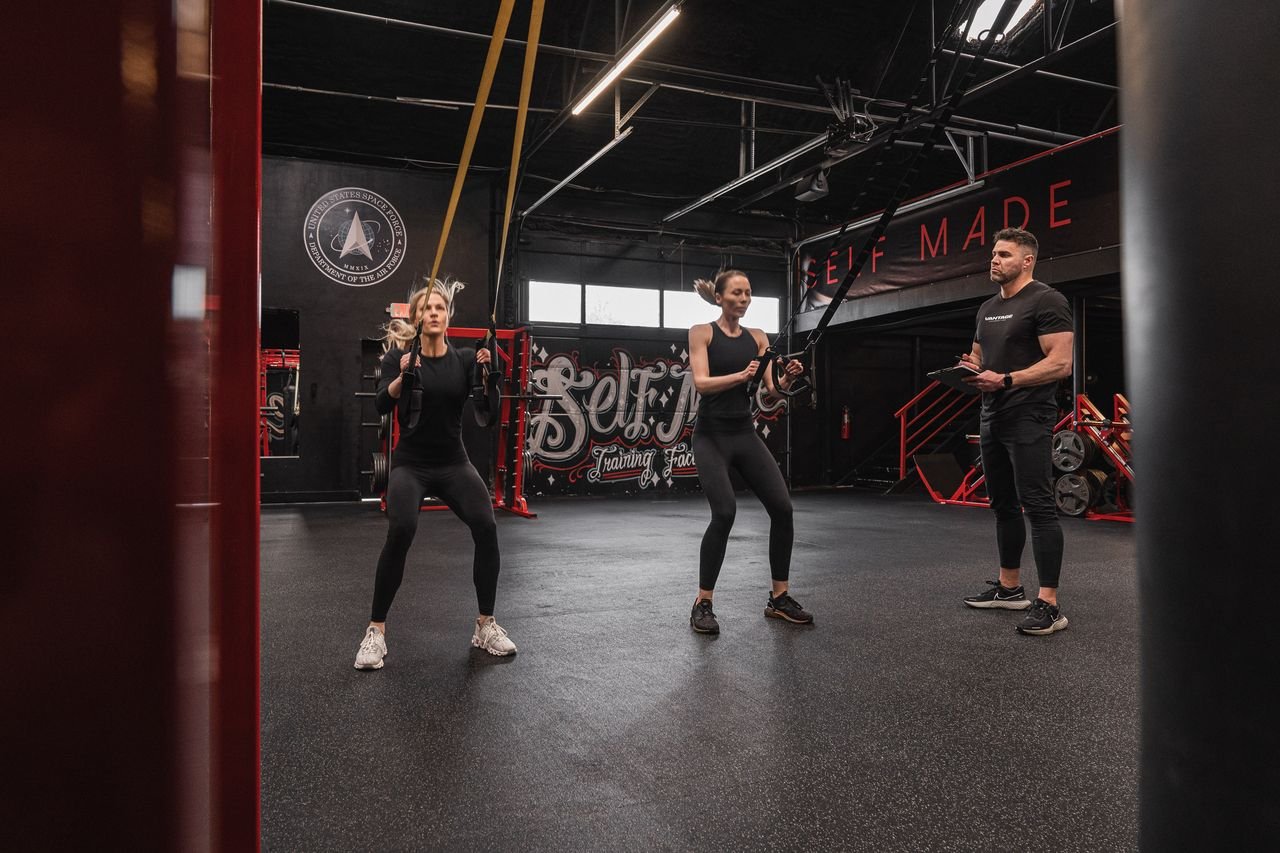
Your trainer can observe how you move, how your technique changes under fatigue, how you respond to different exercises, and how much challenge you can handle.
That information can be used immediately.
Instead of completing a workout and hoping everything went well, you receive feedback during the process.
Progressive Overload and Measurable Progress
A training program needs some way to determine whether you are improving.
That may involve tracking weights, repetitions, sets, measurements, performance, endurance, or other relevant indicators depending on your goal.
A trainer can use that information to make informed decisions about progression.
The goal is not simply to make every workout harder.
The goal is to make the right adjustments at the right time.
Accountability and Consistency
A trainer provides another layer of structure to your fitness routine.
You have scheduled sessions.
You have someone monitoring your progress.
You have someone who understands your goals.
You also have someone who can recognize when you are losing consistency before weeks or months disappear.
For many people, that accountability is just as important as the workout itself.
The Research: Does Supervision Actually Make a Difference?
It is reasonable to ask whether having a trainer actually changes results.
Research does provide some evidence that supervision can influence certain training outcomes.
A systematic review and exploratory meta analysis examined 12 studies comparing supervised and unsupervised resistance training. The analysis included 301 participants in supervised groups and 276 participants in unsupervised groups.
The researchers found a small overall effect favoring supervised training for performance and function. When strength was analyzed separately, the effect was more pronounced and favored supervised resistance training.
However, the study did not find a meaningful overall effect on body composition.
That distinction matters.
It would be inaccurate to say that hiring a personal trainer automatically guarantees greater fat loss or a specific physical transformation.
Instead, the evidence suggests that professional supervision can provide an advantage in areas such as performance and strength, where technique, progression, effort, and structured programming are particularly important.
The results also support a more realistic view of personal training.
A trainer does not replace your effort.
A trainer helps make your effort more organized and purposeful.
Why Your DIY Workout Plan May Not Be the Problem You Think It Is
Sometimes the issue is not that your workout plan is completely wrong.
It may simply be missing several pieces.
You may have good exercises but no progression.
You may have a solid routine but poor consistency.
You may train consistently but lack appropriate recovery.
You may understand the exercises but not know how to structure them.
You may be working hard but not tracking your performance.
You may even be doing everything reasonably well but have reached a point where you need a more individualized approach.
This is why looking at your entire training process is more useful than asking whether one exercise or one workout is “good.”
Fitness results come from the interaction of many factors.
Training
Your workouts need to provide an appropriate stimulus.
Nutrition
Your eating habits need to support the goal you are trying to achieve.
Recovery
Your body needs adequate time and resources to recover from training.
Consistency
The plan needs to be followed often enough to produce meaningful progress.
Progression
The demands of your training need to evolve as your abilities change.
A personal trainer can help bring those pieces together rather than treating each one as a completely separate issue.
The Hidden Cost of Doing Everything Yourself
One of the biggest objections to personal training is cost.
A gym membership is usually less expensive than individualized coaching, and that is a fair comparison to make.
But price and value are not always the same thing.
The Cost of Wasted Time
Imagine spending six months following different workout plans without knowing whether any of them were appropriate for you.
You still invested your time.
You still paid for gym access.
You still put effort into your workouts.
But you may have spent months moving without a clear strategy.
That time cannot be recovered.
The Cost of Constantly Starting Over
Every time you abandon a program and start a new one, you lose some of the consistency needed to evaluate your previous approach.
You may never know whether the program was ineffective or whether you simply stopped following it before it had enough time to work.
A trainer can provide enough structure to prevent you from constantly jumping between programs.
The Value of Professional Guidance
When you hire a personal trainer, you are not simply paying for an hour of exercise.
You are paying for the expertise behind the session.
You are paying for programming.
You are paying for coaching.
You are paying for accountability.
You are paying for adjustments.
You are paying for someone who can help you understand what to do next.
For someone who already knows how to manage all of those things independently, personal training may not be necessary.
For someone who is struggling with those exact areas, professional guidance can provide significant value.
Who Is Most Likely to Benefit From Personal Training?
Personal training is not only for people who have never exercised.
Different types of people can benefit from individualized coaching for different reasons.
Beginners
If you are new to strength training, the number of exercises, machines, programs, and opinions available can be overwhelming.
A trainer can help you build a foundation without forcing you to learn everything through trial and error.
People Who Have Tried Everything
Some people have been exercising for years.
They have tried different diets.
They have downloaded different programs.
They have joined different gyms.
They have experienced periods of progress followed by periods of frustration.
If you recognize that pattern, the answer may not be another program.
It may be professional evaluation.
People Who Have Hit a Plateau
If you are consistent but no longer progressing, having someone evaluate your training can reveal problems you may not recognize yourself.
Busy Professionals
When you only have a limited amount of time available for exercise, having a structured plan can help ensure that the time you spend training has a clear purpose.
People With Specific Goals
If your goal is highly specific, a generalized workout may not be enough.
The more precise the goal, the more useful an individualized strategy can become.
Can You Eventually Train Without a Personal Trainer?
Yes.
Personal training does not have to mean depending on a trainer forever.
In fact, one of the best outcomes of coaching is becoming more knowledgeable and confident about your own fitness.
You can learn how to perform exercises correctly.
You can learn how progression works.
You can learn how to structure workouts.
You can learn how to recognize when a program needs to change.
Some clients eventually transition to mostly independent training.
Others continue working with a trainer because they value accountability, individualized programming, and having someone else manage the details.
There is no universal answer.
The right approach is the one that allows you to train consistently and effectively.
A Realistic Comparison: DIY Workout Plan vs. Personal Training
Consider two people with similar goals.
Both want to lose body fat, build strength, and improve their overall fitness.
Client A: The DIY Approach
Client A searches online for a workout plan and begins training four days per week.
The first few weeks go well.
Then they see a new workout online and decide to change their routine.
A few weeks later, they become frustrated because they are not seeing the progress they expected.
They add more cardio.
Then they reduce their strength training.
Then they try another program.
They are working hard, but there is no consistent progression strategy.
They are also not sure whether their technique is correct or whether they are doing enough.
Client B: The Personal Training Approach
Client B begins by defining the goal and evaluating their starting point.
A trainer creates an individualized program.
The client follows a structured schedule.
Exercises are selected based on the goal.
Performance is tracked.
Technique is coached.
Training variables are adjusted as the client progresses.
When progress slows, the program is evaluated instead of being abandoned.
Both clients are putting in effort.
The difference is the structure surrounding that effort.
The Goal Is Not to Make You Dependent on a Trainer
A good personal trainer should not make you feel incapable of training without them.
The purpose of coaching should be to help you become more informed and confident.
You should understand why you are performing your exercises.
You should understand how your program is progressing.
You should understand what changes are being made and why.
You should become better equipped to make decisions about your fitness.
That knowledge can stay with you long after a specific training session ends.
The Bottom Line: Why Your DIY Workout Plan May Not Be Working
If your DIY workout plan is not producing the results you expected, the solution may not be another workout.
It may be a better system.
Your plan may be too generic.
You may not have a clear progression strategy.
Your technique may need professional feedback.
You may be changing your workouts too often.
You may be struggling with consistency.
You may not know how to respond to a plateau.
Or you may simply be spending your limited time in the gym without a clear strategy for using it effectively.
Working out alone can absolutely work.
But it requires you to become your own programmer, coach, evaluator, and accountability system.
A personal trainer can take on many of those responsibilities and provide a structured approach built around your individual needs.
Research suggests that supervised resistance training can provide advantages for certain performance outcomes, particularly strength, although professional supervision should not be presented as a guarantee of greater body composition results.
The real value of personal training is not that it eliminates the need for effort.
It helps make that effort more intentional.
Why Vantage Elite Fitness Takes a Different Approach
At Vantage Elite Fitness, personal training is designed around the individual rather than a generic workout template.
The facility is located in the Dallas Design District and provides a private training environment with dedicated equipment and space for strength, conditioning, and performance focused training.
The Vantage approach begins with understanding the client.
Your goals.
Your current fitness level.
Your training history.
Your schedule.
Your habits.
Your starting point.
From there, your training can be structured around what you are actually trying to accomplish.
The goal is not to give you another random workout to complete.
It is to create a process that allows you to understand where you are, where you want to go, and what needs to happen between those two points.
Ready to Stop Guessing and Start Training With a Plan?
If you have been following a DIY workout plan but feel like your results do not match the amount of effort you are putting in, you may not need to work harder.
You may need a better strategy.
At Vantage Elite Fitness, personal training in Dallas is built around individualized programming, professional coaching, accountability, and measurable progress.
Instead of spending another few months searching for another workout online, find out what structured coaching can do for your training.
BOOK YOUR FREE PILOT SESSION NOW
Frequently Asked Questions About DIY Workout Plans and Personal Training
Why isn’t my DIY workout plan working?
A DIY workout plan can fail for several reasons, including poor exercise selection, lack of progression, inconsistent training, incorrect technique, insufficient recovery, frequent program changes, or simply using a routine that was not designed around your specific goal.
Can I build muscle without a personal trainer?
Yes. It is possible to build muscle without a personal trainer. However, you need to understand resistance training principles, exercise selection, progressive overload, nutrition, recovery, and consistency. A trainer can help organize those factors into a structured program.
Can I lose weight with a DIY workout plan?
Yes, but weight loss depends on more than exercise alone. Nutrition, total physical activity, recovery, consistency, and individual factors all influence body composition. A personal trainer can help structure your exercise routine and provide accountability, but no trainer can guarantee a specific rate of weight loss.
How do I know if my workout plan is actually working?
Your program should have measurable indicators related to your goal. Depending on what you are trying to accomplish, those indicators might include strength, repetitions, endurance, measurements, body composition, performance, or other relevant metrics. If you have no way to determine whether you are progressing, it may be time to reassess your program.
How often should I change my workout routine?
There is no universal schedule for changing a workout. A program should generally remain consistent long enough to measure progress, while training variables can be adjusted when there is a clear reason to do so. Constantly changing exercises simply because a new workout becomes popular can make progress harder to evaluate.
What does a personal trainer do differently from a workout app?
A workout app can provide information and structure, but a personal trainer can observe you in real time and make decisions based on your individual performance. A trainer can modify exercises, adjust progression, provide technique feedback, and respond to changes that a generic program may not recognize.
Is personal training only for beginners?
No. Beginners can benefit from learning proper technique and building a foundation, but experienced trainees can also benefit from professional coaching when they reach a plateau, have a specific goal, or want another professional perspective on their training.
Can a personal trainer help me if I have been stuck at the same results for months?
Yes. A trainer can evaluate your current program and look for potential issues involving exercise selection, volume, intensity, progression, consistency, recovery, and other factors. The goal is to identify what may be limiting progress rather than simply adding more workouts.
Is personal training worth the money?
It depends on your individual needs. If you already have the knowledge and discipline to create, manage, and progress your own program, you may prefer independent training. If you repeatedly struggle with programming, consistency, progression, or knowing what to do next, the expertise and accountability provided by a personal trainer may offer significant value.
How do I choose a personal trainer in Dallas?
Look for a qualified professional with relevant experience, strong communication skills, an individualized approach, and a clear understanding of your goals. You should also ask how they measure progress, how they adjust programs, and what their training environment is like.
Vantage Elite Fitness: Personal Training in Dallas
Your fitness journey does not have to be a constant cycle of searching for workouts, starting over, getting frustrated, and trying something new.
You can have a plan.
You can have a strategy.
You can have someone who understands your goals and helps you work toward them.
Vantage Elite Fitness provides personalized personal training in Dallas for clients who want more than access to gym equipment. The focus is on structured coaching, individualized programming, accountability, and helping clients make meaningful progress.
If your DIY workout plan has stopped working, you do not necessarily need more information.
You may need someone who knows how to turn that information into a strategy designed specifically for you.
BOOK YOUR FREE PILOT SESSION NOW
Vantage Elite Fitness
Personal Training in Dallas, Texas