
Most people do not struggle to find a workout.
They struggle to figure out which workout is actually right for them.
Open Instagram or YouTube and you will find thousands of workout programs promising bigger muscles, faster fat loss, better strength, improved mobility, or a complete body transformation. There are programs for beginners, advanced lifters, busy professionals, athletes, people trying to lose weight, and people trying to build muscle.
The problem is that your body does not know what worked for someone else on social media.
Your training history is different. Your strength is different. Your mobility is different. Your recovery is different. Your schedule is different. Your goals are different. Even two people with the same goal can require completely different approaches to reach it.
This is one of the biggest reasons personal training can make such a difference.
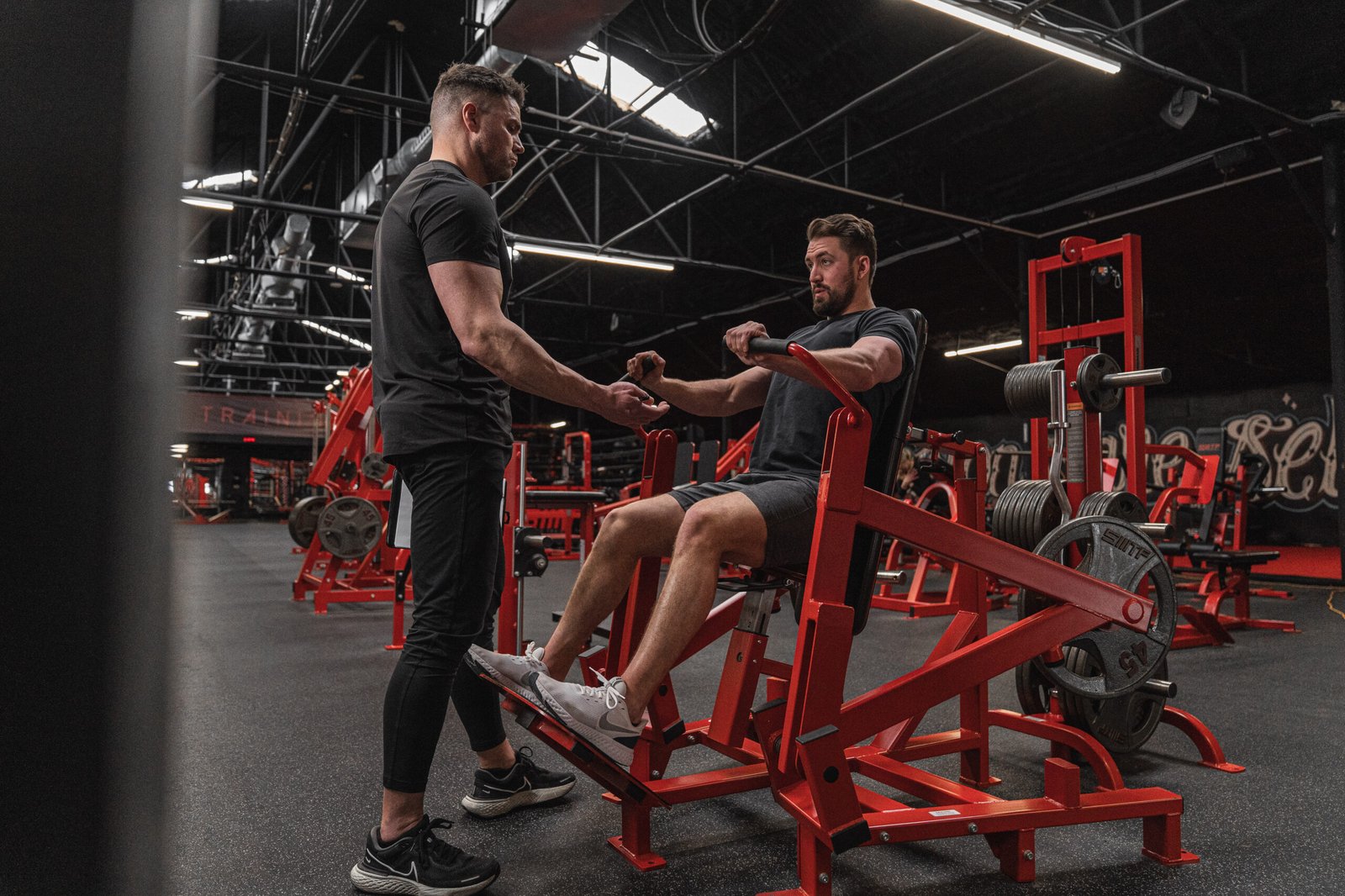
A personal trainer is not simply someone who stands next to you while you exercise. The real value comes from having someone who can evaluate where you are starting, understand where you want to go, and build and adjust the training process around you.
The latest American College of Sports Medicine position stand on resistance training reinforces the importance of prescription variables such as frequency, intensity, exercise selection, volume, and progression when designing resistance training programs. The evidence review behind the position stand included randomized trials lasting from 6 to 52 weeks and was designed to examine how resistance training prescriptions influence strength, muscle growth, and physical performance.
That leads to a simple question:
If your body, goals, and circumstances are different from everyone else’s, why should your workout be exactly the same?
The Problem With Following Someone Else’s Workout
Following a workout you found online is not automatically a bad thing.
Exercise is beneficial, and many general programs can help people become more active and stronger. The problem begins when a generic workout is treated as if it were a personalized plan.
A program created for a 25 year old experienced lifter who trains five days a week may not make sense for a 42 year old professional who can realistically train three days a week.
A workout designed for someone with years of lifting experience may also be inappropriate for someone who is still learning basic movement patterns.
Even people who have similar goals may need different strategies.
Two people might both say, “I want to lose fat and build muscle.”
One person may already have a strong training background and need more advanced programming. Another may need to improve basic strength and movement quality first. One may recover quickly between sessions. Another may have a demanding work schedule, poor sleep, or limited training availability.
The goal sounds identical.
The path does not have to be.
Your Goal Is Only the Starting Point
One of the biggest mistakes people make is believing that a fitness goal automatically tells them what workout to do.
It does not.
“Build muscle” is a goal.
“Lose 20 pounds” is a goal.
“Get stronger” is a goal.
“Look better in a suit” is a goal.
“Improve athletic performance” is a goal.
The training prescription comes after understanding the person behind the goal.
A good program has to answer questions such as:
What is your current fitness level?
How much training experience do you have?
Which exercises can you perform safely and effectively?
How much time can you realistically dedicate to training?
How well do you recover?
What movements feel difficult?
Where are your current strength limitations?
What is your nutrition situation?
What has worked for you before?
What has failed?
What does your schedule actually allow you to do consistently?
These questions change the program.
That is exactly where a personal trainer provides value.
A Personal Trainer Starts With the Person, Not the Program
One of the strongest arguments for personal training is that the process begins with assessment rather than immediately handing you a workout.
This distinction matters.
A generic program starts with the exercises.
Personalized coaching starts with the person.
At Vantage Elite Fitness in Dallas, the initial process is designed around understanding the client’s goals, timeline, habits, training history, starting measurements, and limitations before developing a personalized plan. The company’s Pilot Strategy Session also includes a fitness benchmark using foundational exercises and an evaluation used to develop an individualized training and nutrition strategy.
That approach changes the conversation.
Instead of asking, “What workout should I do today?”
You begin asking:
“What does my body need right now?”
“What should I be progressing?”
“What should I change?”
“What is preventing me from getting to the next level?”
Those are much more useful questions.
Why Personalization Matters More as Your Goals Become More Specific
Generic workouts can be useful when your only objective is to move more.
But the more specific your goal becomes, the more important your training decisions become.
If you simply want to be more active, almost any consistent movement is better than doing nothing.
But what happens when your goal becomes more specific?
You want to add significant muscle.
You want to reduce body fat while maintaining muscle.
You want to increase your squat or deadlift.
You want to improve your physique.
You want to train around a limitation.
You want to make meaningful progress without spending hours in the gym.
Now exercise selection, training volume, intensity, recovery, progression, and consistency become much more important.
The 2026 ACSM position stand reviewed evidence across resistance training programs and found that different training variables influence different outcomes. Its purpose was specifically to update recommendations for resistance training prescription based on the available evidence.
The lesson is not that there is one perfect workout.
The lesson is almost the opposite.
There are multiple effective training strategies, and the challenge is determining which combination makes sense for the individual.
Your Training History Changes What You Need
A beginner and an experienced lifter should not necessarily train the same way.
A beginner may need more instruction, more practice with fundamental movements, and a gradual introduction to training volume.
An experienced lifter may need more sophisticated programming, closer monitoring of progression, and strategic changes when a particular movement or training approach stops producing the desired result.
The exercises may overlap.
The prescription does not have to.
This is one of the reasons working with a qualified trainer can be valuable. Instead of constantly searching for another workout, you have someone who can determine what should happen next.
Your Schedule Changes What You Need
Your schedule is another variable that generic programs cannot fully account for.
Someone may have five hours available for training every week.
Someone else may realistically have three hours.
Someone may have a flexible work schedule.
Another person may spend most of the week in meetings, travel frequently, or have unpredictable professional responsibilities.
A theoretically perfect program that you cannot consistently complete is not actually a perfect program.
The best program is one that produces meaningful training stimulus while fitting into the reality of your life.
That is why personalization is not just about choosing different exercises.
It is also about making the entire training process realistic enough to sustain.
A Personal Trainer Can Adjust the Plan When Your Body Changes
This is another major difference between a static workout plan and personal coaching.
Your body does not stay exactly the same for twelve weeks.
Your strength changes.
Your work schedule changes.
Your recovery changes.
Your motivation changes.
Your exercise technique improves.
Your goals may evolve.
A good training program therefore should not be treated as something that is written once and never touched again.
ACSM’s current exercise prescription framework emphasizes evaluating and modifying exercise prescription based on adherence, response, and changing circumstances. It also emphasizes addressing barriers that can interfere with exercise adoption and adherence.
This is one of the most important functions of a personal trainer.
The trainer watches what happens after the plan is implemented.
If something is working, it can be progressed.
If something is not working, it can be investigated.
If recovery is poor, training can be adjusted.
If an exercise does not feel right, another option can be considered.
If progress slows, the program can change rather than simply telling the client to work harder.
That feedback loop is where coaching becomes much more valuable than simply having a workout written on a piece of paper.
The Difference Between Exercise and Training
There is an important distinction between exercising and training.
Exercise means performing physical activity.
Training means performing exercise with a specific objective and a structured progression toward that objective.
You can exercise without knowing exactly why you are doing a particular movement.
Training requires a reason.
Why this exercise?
Why this number of sets?
Why this amount of resistance?
Why this frequency?
Why increase the weight now?
Why reduce volume this week?
Why change the exercise?
Why repeat the same movement?
When you have a personal trainer, you do not have to make all of those decisions yourself.
Your trainer can take the larger goal and turn it into a sequence of smaller decisions.
That can make the process considerably more efficient.
The Real Value of a Personal Trainer Is Not More Exercises
Many people assume that hiring a personal trainer means learning more exercises.
That is only part of it.
You can find thousands of exercises online for free.
The harder part is knowing which exercises deserve your time.
A trainer’s value comes from selecting, organizing, teaching, monitoring, and adjusting those exercises according to the client’s needs.
Imagine you have one hour available for training.
You could spend that hour moving from machine to machine because each exercise looked interesting online.
Or you could spend that hour following a structured session designed around your current priorities.
The second option does not necessarily mean doing more.
It means making the available training time more purposeful.
For busy professionals in Dallas, that distinction can be especially important.
If your schedule is already demanding, spending additional hours in the gym is not always the answer. Sometimes the better strategy is to make the training you are already doing more focused.
What Happens When Your Program Finally Fits You?
When training is properly matched to the individual, the experience can change.
You stop wondering whether you are doing enough.
You stop changing programs every few weeks because another workout appeared online.
You stop judging your progress against someone else’s routine.
Instead, you have a process.
You know what you are working toward.
You know what you are currently capable of.
You know what you need to improve.
You know what you are measuring.
And you know what the next step is.
That clarity can be one of the most valuable parts of having a personal trainer.
Personal Training Is About Adjusting the Strategy, Not Just Pushing Harder
There is a common misconception that a personal trainer’s primary job is to make workouts harder.
Harder is not always better.
If someone is already training intensely but recovering poorly, adding more work may not solve the problem.
If someone has been doing the same exercises for months without progression, simply telling them to push harder may not be enough.
If someone is performing an exercise incorrectly, more weight can make the problem worse.
The better question is not always:
“How can I work harder?”
Sometimes the better question is:
“How can I train smarter?”
A qualified trainer can help answer that question by observing technique, tracking performance, evaluating progress, and adjusting the program.
A 2025 randomized controlled trial involving 79 trained adults compared supervised resistance training with app guided and self guided training over 10 weeks. Adherence was highest in the supervised group at 88.2%, compared with 81.2% for the app guided group and 52.2% for the self guided group. All three groups improved strength, while the supervised group achieved significantly greater squat strength gains than the other two groups.
That does not mean every person must have a trainer to make progress.
It does show why supervision and coaching can matter when the objective is to optimize a structured resistance training program.
The Personal Trainer Advantage: Someone Who Can See What You Cannot
One of the hardest things about training alone is that you are both the athlete and the coach.
You have to perform the workout.
You have to watch your technique.
You have to decide whether the weight is appropriate.
You have to determine whether you are progressing.
You have to decide when to change the program.
And you have to remain objective when the results are slower than expected.
That is difficult.
A trainer brings another perspective.
They can see movement patterns you may not notice.
They can identify when your technique changes as fatigue increases.
They can recognize when a particular exercise is no longer appropriate for your current goal.
They can also recognize progress that you might overlook.
That outside perspective can help you make better decisions.
When a Personal Trainer Makes the Most Sense
Personal training is not only for beginners.
In fact, experienced people can benefit significantly because the more specific the goal becomes, the more important programming decisions can become.
A personal trainer can be particularly valuable if you:
Have a Specific Transformation Goal
If you want a meaningful change in body composition, strength, muscle development, or physical performance, having a structured strategy can make the process more intentional.
Keep Starting Over
If you have repeatedly started workout programs but rarely maintain them long enough to see meaningful results, the issue may not be a lack of information.
You may need a system that gives you structure and makes adjustments when life gets in the way.
Feel Like You Are Working Hard Without Progressing
This is one of the biggest signs that your current approach deserves another look.
More effort does not automatically produce better results.
Sometimes the program needs to change.
Have Limited Training Time
If you only have a few hours each week, you want those hours to count.
Personal training can help organize those sessions around your highest priorities instead of leaving you to figure everything out while you are already inside the gym.
Want Expert Feedback
Sometimes you do not need another workout.
You need someone experienced enough to tell you what you are doing well, what needs to change, and what should happen next.
Why This Matters in Dallas
Dallas is filled with gyms, fitness studios, online programs, apps, influencers, and workout options.
Access to information is not the problem.
There is more fitness information available today than most people could consume in a lifetime.
The challenge is knowing what information applies to you.
For professionals in Dallas who have demanding schedules and specific goals, personalized coaching can provide something a generic workout cannot: a training strategy built around the individual.
Vantage Elite Fitness operates in the Dallas Design District and positions its personal training around customized programming, private one on one coaching, accountability, and a comprehensive approach that includes training, nutrition, and mindset.
The goal is not simply to give clients another workout.
It is to create a process that makes the workout part of a larger strategy.
The Cost of Following the Wrong Program
There is another way to look at the value of personal training.
Instead of asking:
“How much does a personal trainer cost?”
Ask:
“How much time can I lose following the wrong approach?”
Think about the months spent switching programs.
The equipment you purchased but never used.
The workouts you started and abandoned.
The time spent watching videos trying to understand technique.
The progress you may have missed because your program was not aligned with your goal.
The frustration that comes from working hard without knowing whether what you are doing is actually moving you forward.
Personal training does not eliminate every obstacle.
It does give you a professional whose job is to help you navigate them.
That can be especially valuable when your time is limited and your expectations are high.
What a Personalized Training Process Should Look Like
A good personal training experience should feel more sophisticated than simply being handed a workout.
It should begin with understanding.
Then assessment.
Then planning.
Then execution.
Then measurement.
Then adjustment.
At Vantage Elite Fitness, the process begins with discovering the client’s goals, timeline, habits, history, and starting point. The training team then benchmarks foundational movements and uses that information to develop a personalized training and nutrition plan.
That creates a continuous cycle:
Assess. Train. Measure. Adjust. Progress.
That is what personalized training should ultimately provide.
Frequently Asked Questions About Personalized Personal Training
Is a personal trainer necessary to get results?
No. People can absolutely make progress without a personal trainer.
The advantage of personal training is that you have professional guidance throughout the process. A trainer can help with exercise selection, technique, progression, accountability, and program adjustments, which can make the process more structured and efficient.
Why can two people need different workouts?
Because their goals, training experience, strength levels, movement abilities, schedules, recovery capacity, and preferences can differ.
Even when two people have the same goal, the most appropriate training approach does not have to be identical.
Can a personal trainer help if I already know how to work out?
Absolutely.
Experienced gym goers may not need someone to explain what a squat or bench press is. They may benefit more from programming strategy, progression, technique feedback, exercise selection, and objective assessment of their progress.
Does personalized training mean every workout has to be completely different?
No.
Personalization does not mean constantly changing exercises.
In many cases, repeating key movements is useful because it allows you to measure performance and progress over time. Personalization means deciding what should stay, what should progress, and what should change based on the individual’s response.
Is personal training only for people trying to lose weight?
No.
A personal trainer can help with goals including muscle growth, strength development, body composition, athletic performance, mobility, general fitness, and building a sustainable training routine.
How do I know if my current workout is actually working?
Look beyond whether you feel tired after a workout.
A good program should have measurable objectives. Depending on your goal, that could include changes in strength, body composition, measurements, performance, movement quality, or training consistency.
If you cannot identify what you are trying to improve or how you are measuring it, it may be time to reconsider your approach.
Vantage Elite Fitness: Your Training Should Be Built Around You
The biggest mistake you can make in fitness is assuming that the best workout is the one that worked for somebody else.
Your body is not somebody else’s body.
Your schedule is not somebody else’s schedule.
Your training history is not somebody else’s training history.
And your definition of success is not somebody else’s definition of success.
That is why personal training should be about much more than counting repetitions.
It should be about understanding the individual, creating a strategy, measuring the response, and making intelligent adjustments along the way.
At Vantage Elite Fitness in Dallas, the approach is built around customized programming, one on one coaching, accountability, and a private training environment. The complimentary Pilot Strategy Session is designed to help establish where you are starting and what a personalized path toward your goal can look like.
If you are tired of guessing which workout is right for you, it may be time to stop following someone else’s plan and start building one around yourself.