
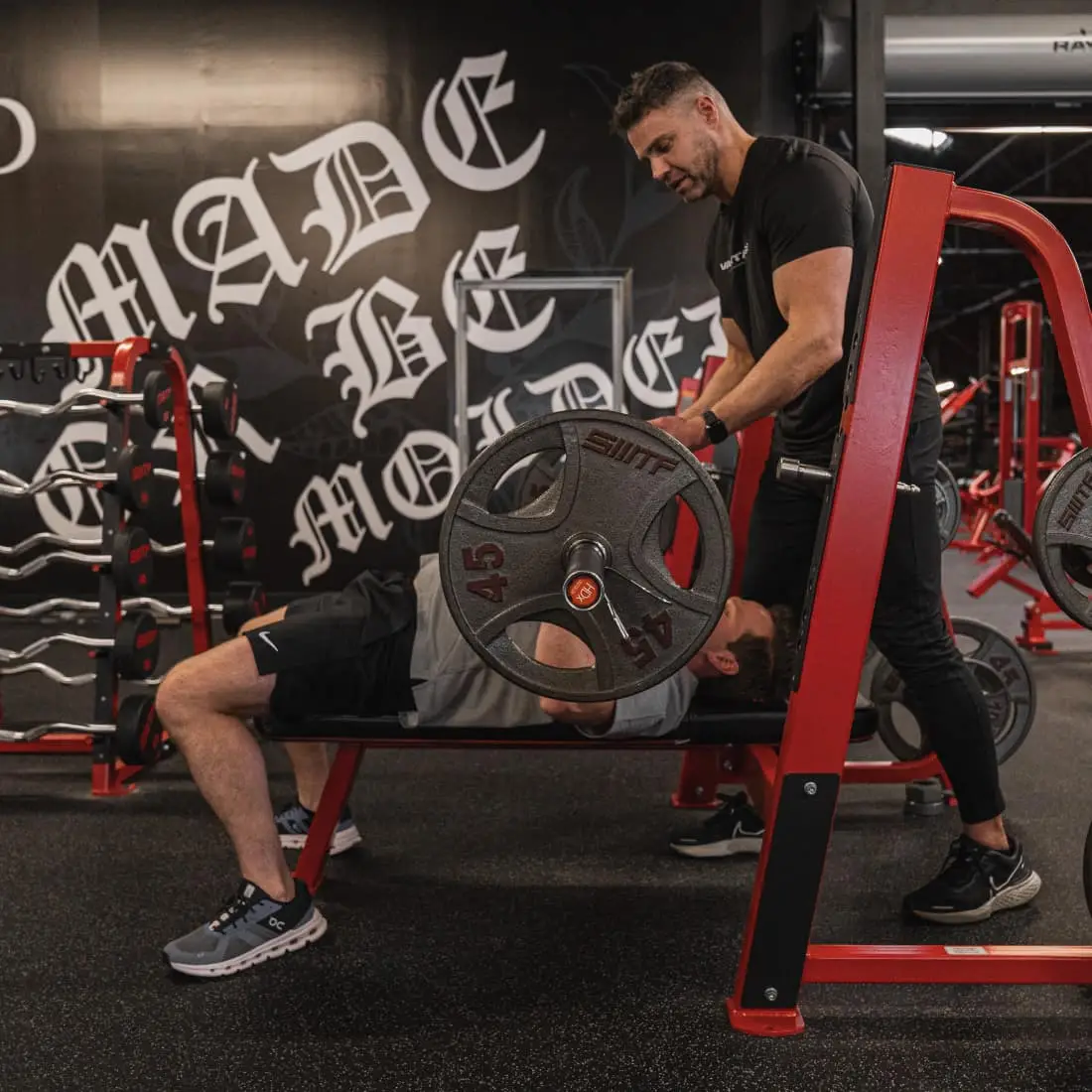
You’ve been putting in the work. Showing up. Sweating. Grinding through workouts you found online.
And yet — something isn’t adding up.
The scale isn’t moving the way you expected. Your strength numbers have flatlined. You’re dealing with a nagging ache in your shoulder or knee that wasn’t there six months ago. Or maybe you’re just exhausted from doing everything “right” and having nothing to show for it.
Here’s what the research actually reveals: Working out without professional guidance has a failure rate of over 90%. The problem isn’t your effort. The problem isn’t your genetics. The problem is the absence of a system that works.
People who train with a certified personal trainer achieve their fitness goals at 79% success rates compared to just 23% for those training alone. That’s not a marginal difference. That’s the difference between transformation and years of spinning wheels.
This guide reveals exactly why a personal trainer isn’t an optional upgrade — it’s the single most important investment you can make in your health, your body, and your long-term quality of life. We’ll break down what trainers actually provide, why you cannot replicate it alone, the real cost of trying, and the data that makes the case impossible to ignore.
The Hard Truth: What’s Actually Happening When You Train Without Guidance
Before understanding what a trainer provides, understand what happens without one.
Most people don’t fail because they’re lazy or uncommitted. They fail because they’re working without the structure, expertise, and feedback that produces results. Here’s how the typical self-directed fitness attempt unfolds — and why it almost always ends the same way.
Weeks 1 to 2: High Motivation, Zero Framework
You start strong. You research programs, watch YouTube tutorials, download a fitness app. The intention is genuine. You hit the gym four or five days per week. You feel productive. You’re sore, which you interpret as a sign it’s working.
But here’s what’s already going wrong: You’re following programming designed for someone else. Your form on compound movements has errors you can’t see or feel. There’s no progression plan. No tracking system. No way to know if any of it is moving you in the right direction.
Weeks 3 to 6: The First Warning Signs
Motivation starts to fluctuate. The initial soreness has turned into persistent discomfort — your shoulder complains during pressing movements, your lower back tightens after deadlifts.
You’re also unsure if anything is actually working. You look the same. You feel roughly the same. You’re using the same weights you started with. You start wondering if the program is wrong, if you’re doing the exercises incorrectly, if you need more cardio, less cardio, more protein, different exercises.
The confusion is overwhelming and you have no one to ask.
Weeks 7 to 12: Plateau, Program Hopping, and Doubt
Progress has clearly stalled. You change programs — maybe the old one wasn’t right. You follow a different influencer. Try a different split. Experiment with intermittent fasting.
Nothing clicks. You’re investing more mental energy researching fitness than actually training effectively.
The nagging injuries persist. You’re not sure whether to train through them or rest. You’re not sure what you’d be resting from, exactly.
Months 4 to 6: Declining Consistency
Training drops to two days per week, then one, then sporadic. You’re telling yourself you’re too busy, but the real issue is discouragement. You’ve put in months of genuine effort and have little to show for it.
You’re starting to believe the problem is you — your genetics, your metabolism, your schedule, your willpower. You’re wrong about all of that, but months of invisible progress have made the conclusion feel inevitable.
Month 7 and Beyond: Abandonment
Most people stop entirely. Or they begin the cycle again in a few months with a new plan, new optimism, and the same missing element: professional guidance.
Research confirms this pattern repeats itself. 92% of self-directed fitness attempts do not achieve the stated goal. This isn’t an accident. It’s a predictable outcome of training without the systems that actually produce results.
What a Personal Trainer Actually Does (It Goes Far Beyond Counting Reps)
The most common misconception about personal training is that you’re paying someone to watch you exercise and say “five more.” That’s not what elite trainers do.
Here’s what you’re actually getting:
1. A Complete Fitness System Built Around Your Body
Generic programs — the ones you find online, in apps, or from a friend — are built for a fictional average person. That person doesn’t have your injury history, your postural imbalances, your schedule constraints, your specific goal, or your movement limitations.
Individualized programming accounts for all of it:
Your biomechanics and movement patterns Your injury history and existing limitations Your specific goal (fat loss, muscle gain, athletic performance, general health) Your recovery capacity (which varies with age, stress levels, and sleep quality) Your available equipment and training frequency Strategic periodization — planning how your training evolves over weeks and months to prevent adaptation plateaus
Research shows individualized programming delivers 31% better results than generic approaches. That gap compounds significantly over a 3 to 6 month training block.
2. Form Coaching That Protects You and Maximizes Results
78% of self-taught exercisers have significant form errors on compound movements — and most are completely unaware of them. This matters for two critical reasons.
First: Poor form dramatically reduces exercise effectiveness. If your squat mechanics are off, you’re underloading your glutes and quads while overloading your lower back. You’re working hard but not working the right muscles at the right intensity. You could train for a year and leave significant results on the table simply because of movement errors.
Second: Poor form has a cumulative injury cost. A knee that tracks slightly inward during every squat rep doesn’t hurt today. It hurts six months from now when the tendon finally gives out — and suddenly you’re spending money on physical therapy, losing training time, and starting over.
Elite trainers catch these errors in real time. Not after the damage is done. Not when you’ve spent months grooving bad patterns. On the first rep, in the first session.
3. Strategic Progressive Overload
This is one of the most important — and most commonly ignored — principles in all of training.
Progressive overload means systematically increasing the demands placed on your body so it continues to adapt. More weight, more reps, more volume, less rest — applied intelligently over time.
Research reveals a startling statistic: 63% of self-directed exercisers use the same weights for months on end. No progression = no adaptation = no results. You’re maintaining, at best.
Trainers design progression into the program from day one. Every 1 to 2 weeks, they know exactly how to advance your training — whether that’s adding weight, adjusting tempo, increasing volume, or manipulating rest periods. This systematic progression is what separates “going to the gym” from actually building a better body.
4. Accountability That Produces Consistency
Here’s a number worth sitting with: self-directed exercisers complete only 36% of their planned workouts. People training with a personal trainer complete 85%.
These numbers aren’t close. And consistency is the single most important variable in any fitness outcome.
What trainer accountability actually looks like:
Scheduled appointments that are harder to cancel than a solo session you planned vaguely Someone who knows your schedule, your history, and your goals — and will notice if you disappear Regular check-ins between sessions that maintain momentum and surface problems early Progress tracking that makes your commitment visible and measurable
When you’re accountable to someone besides yourself, the calculus of skipping changes entirely. That shift in consistency is often the single most valuable thing a trainer provides.
5. Integrated Nutrition Guidance
82% of effective personal trainers provide nutrition guidance as part of their service — and for good reason. Training and nutrition cannot be separated if you’re serious about results.
Common nutrition mistakes that kill fitness progress:
Insufficient protein intake (preventing muscle protein synthesis) Caloric extremes — too much or too little relative to your goal Eating patterns that don’t align with training timing Ignoring the nutritional demands of the specific type of training you’re doing
An elite trainer doesn’t hand you a meal plan and walk away. They design your nutrition strategy around your training, your lifestyle, and your goal — and adjust it as your body responds and your goal evolves.
Research shows integrated training plus nutrition programs deliver 2.3 times better results than training-only approaches. That number alone makes the case for professional guidance.
6. Real-Time Problem Solving
Every body is different. Every training block surfaces different challenges. Progress stalls. Life gets complicated. Old injuries flare up. Sleep tanks for a week. A work trip disrupts everything.
Self-directed trainees have no one to turn to when this happens. They improvise, guess, or quit.
Elite trainers have seen these situations hundreds of times. They diagnose what’s happening — is this a recovery issue, a nutrition issue, a programming issue, a sleep issue? — and adjust immediately. What would derail a self-directed trainee becomes a manageable variable in professional training.
The Success Rate Data: Why the Numbers Matter
Let’s be direct about what the research shows.
| Training Alone | With a Personal Trainer | |
|---|---|---|
| Goal achievement rate | 23% | 79% |
| Planned workout completion | 36% | 85% |
| Injury rate | 43% higher | Significantly lower |
| Plateau frequency | High, unmanaged | Strategically managed |
| Time to visible results | 6 to 12+ months | 6 to 8 weeks |
These aren’t abstract numbers. They represent the difference between transformation and wasted years.
If 100 people start a fitness journey:
23 will achieve their goals training alone. 77 will waste months or years without meaningful results.
79 will achieve their goals working with an elite trainer. Only 21 won’t reach their stated outcome.
Which group do you want to be in?
The Real Financial Cost of Training Without a Trainer
People often frame the question as: “Can I afford a trainer?”
The better question is: “Can I afford not to have one?”
Let’s run honest numbers on both scenarios.
Scenario A: DIY Training for 12 Months
Direct costs: Gym membership: $50/month × 12 months = $600 Online program or app: $20/month × 12 months = $240 Home equipment purchases (dumbbells, bands, etc.): $250 Minor injury treatment (very common without professional form coaching): $1,000 to $3,000
Time cost: 3 hours training per week × 52 weeks = 156 hours invested At $25/hour (conservative): $3,900 in time value Zero return on that investment because the goal wasn’t achieved
Total true cost: $6,000 to $8,000+ Outcome: 77% likelihood of failure Result: Starting over in year two with destroyed confidence and potentially entrenched bad habits
Scenario B: Professional Training for 16 Weeks
Direct costs: Training sessions: $120/session × 2 sessions/week × 16 weeks = $3,840 Gym membership (if applicable): $50/month × 4 months = $200 Total: $4,040
Time cost: 3 hours training per week × 16 weeks = 48 hours invested At $25/hour: $1,200 in time value — with a 79% likelihood of achieving your goal in that time frame
Outcome: 79% likelihood of achieving stated goal in 4 months Result: Transformation achieved, proper form established, sustainable habits built, continued independent training possible
When you factor in success probability and the compounding costs of failure, professional training is the more financially rational choice — not the indulgent one.
Why Most People Still Hesitate — And Why That Reasoning Doesn’t Hold Up
Three objections come up constantly. Here’s the honest response to each.
Objection 1: “I’ll try it on my own first and hire a trainer if I need to.”
This feels logical but usually backfires. Here’s what happens when you train without guidance for 6 to 9 months before hiring a trainer:
You’ve spent months grooving movement patterns that are partially or entirely wrong — the trainer now has to undo ingrained bad habits before building good ones.
Your motivation has been damaged by repeated lack of progress. Rebuilding belief takes additional time.
You may have developed an injury that requires programming modifications or a recovery period before full training can begin.
Starting with a trainer from day one is always more efficient than attempting DIY first. You learn correctly from the beginning. You see results immediately, which builds motivation and belief. You build a foundation instead of having to demolish one.
Objection 2: “I can find everything I need online for free.”
Yes, you can find information for free. What you cannot find online:
Someone who assesses your specific movement, identifies your specific limitations, and designs programming specifically around your body Real-time form correction in the moment you’re doing the movement A system of accountability that makes you actually complete your workouts Strategic adjustments when your progress stalls or your circumstances change
Free information provides generic knowledge. A personal trainer provides customized application of expertise to your unique situation. The difference in outcome reflects that difference exactly.
Objection 3: “I don’t have time to commit to regular sessions.”
People who say they don’t have time to work with a trainer often spend more total hours on ineffective self-directed training — researching programs, switching approaches, recovering from injuries, restarting after quitting — than they would in a structured training relationship.
Elite trainers can design programs for 2 sessions per week with independent work on off days. The sessions are focused, efficient, and purposeful. There is no wasted time.
The question isn’t whether you can fit training into your life. The question is whether the training you’re fitting in is actually working.
Who Benefits Most From Personal Training?
The answer is: almost everyone, at almost every level. But certain situations make professional guidance especially important.
Complete Beginners
If you’ve never trained seriously, the learning curve is steep and the injury risk is high. Getting the foundation right from the start — movement patterns, progression principles, basic programming structure — is infinitely easier than trying to correct years of bad habits later.
Beginners working with elite trainers see results 2 to 3 times faster than beginners training alone because they’re not spending months figuring out what works.
People Who Have Tried and Failed Before
If you’ve started and stopped multiple times, the missing variable is not motivation or willpower. It’s a system that keeps you consistent, shows you visible progress, and adjusts when life gets in the way.
Repeated self-directed failure doesn’t mean transformation isn’t possible for you. It means you’ve been attempting it without the tools that make it work.
People With Injuries or Limitations
Training around injuries requires expertise. The wrong movement, the wrong load, or the wrong progression can turn a minor issue into a serious one.
Elite trainers assess limitations, modify programming intelligently, and work with your body as it is — not as an idealized version of it. Many clients with significant injury histories achieve transformations they believed were no longer possible.
People With Specific Performance Goals
Whether you’re training for your first marathon, preparing for a powerlifting competition, or working toward a specific athletic benchmark, goal-specific programming makes an enormous difference.
The closer you are to an advanced goal, the more important professional expertise becomes. The margin between a good program and a great one grows as goals get more specific.
People Who Struggle With Consistency
If you know what to do but consistently don’t do it, accountability is the missing variable. No app, no spreadsheet, and no personal commitment strategy matches the consistency impact of having a trainer expecting you to show up.
What Separates Elite Trainers From Average Ones
Not all personal trainers deliver the results above. Trainer quality varies dramatically — and the gap between a mediocre trainer and an elite one is the difference between transformation and expensive disappointment.
Elite trainers have:
Nationally recognized certifications: NASM, ACE, NSCA, or ACSM at minimum 5+ years of professional training experience with hundreds of diverse clients Documented client transformation records — not anecdotes, but measurable results Continuing education of 20+ hours annually — exercise science evolves and elite trainers evolve with it Evidence-based methodology grounded in exercise physiology, not trends Client success rates consistently above 70%
Elite trainers provide:
Comprehensive initial assessment (movement screen, injury history, goal clarification, lifestyle evaluation) Individualized programming designed specifically for your body and goals — never a template Real-time form coaching that maximizes effectiveness and prevents injury Integrated nutrition guidance aligned with training demands Systematic progress tracking with regular assessments every 4 to 6 weeks Accountability between sessions — not just during them Strategic adjustments the moment progress slows
Red flags that signal a trainer to avoid:
No nationally recognized certification or vague answers about credentials Cannot provide documented client examples similar to your situation Promises specific results in unrealistically short timeframes Trains you while distracted — texting, talking to others, not fully present Rigid “one approach fits everyone” philosophy Pushes supplements or products aggressively
When you invest in professional training, invest in quality. The success rate difference between uncertified and elite certified trainers is the difference between 41% and 85% client success rates.
The Compound Effect: Why Starting Now Matters
Every week you delay professional guidance is a week of compounding sub-optimal outcomes.
If you’re training now without professional guidance, you’re accumulating:
Form patterns that become harder to unlearn the longer they’re practiced Potential overuse injuries developing slowly beneath the surface Weeks and months of time investment with reduced return compared to optimized training Eroding motivation from progress that’s slower than it should be
Starting with elite guidance today means:
Seeing meaningful results in 6 to 8 weeks (compared to 4 to 6 months alone) Building movement patterns correctly from the current moment forward Protecting yourself from injuries that haven’t developed yet Compounding progress — results that build on themselves rather than plateauing and cycling
The best time to start with a personal trainer was when you first decided fitness mattered. The second best time is now.
Why Vantage Elite Fitness Clients Consistently Achieve What Others Can’t
We don’t hire trainers who simply hold certifications. We hire trainers who transform clients — and we’ve built systems that make that outcome predictable rather than exceptional.
Our trainer standards:
Nationally recognized certifications (NASM, ACE, NSCA minimum) Minimum 5 years of professional training experience Documented client transformations with measurable, verifiable results 20+ hours of continuing education annually Evidence-based methodology — every programming decision is grounded in exercise science Client success rates above 70% — matching and exceeding research benchmarks for elite trainers
What every Vantage Elite client receives:
Comprehensive initial assessment — movement screening, strength baseline, injury history, goal clarification, lifestyle evaluation Individualized programming — designed specifically around your body, goals, and constraints. Not a template. Not a modified template. Yours. Real-time form coaching that maximizes muscle activation and eliminates injury risk Integrated nutrition strategy — eating and training designed to work together Weekly accountability and progress tracking between sessions Strategic program adjustments the moment progress stalls or your circumstances change
Our overall client success rate: Over 70% of clients achieve their stated goals within expected timeframes. That’s not a coincidence. It’s the result of elite trainers, proven systems, and a commitment to individualized care at every stage.
BOOK YOUR FREE PILOT SESSION NOW
Our complimentary Pilot Strategy Session gives you access to comprehensive movement assessment, trainer consultation, and a complete picture of what your transformation looks like — before you commit to anything.
You’ll meet your trainer. Experience the difference between elite coaching and what you’ve been doing on your own. And make your decision with complete information.
Vantage Elite Fitness – Book Your Free Strategy Pilot Call and Session
FAQ: Why a Personal Trainer Is Worth the Investment
Do I really need a personal trainer, or can I get results on my own?
The data answers this directly. 79% of people working with elite certified trainers achieve their stated goals. Only 23% of self-directed trainees do. If your fitness goal genuinely matters to you, the 9-times higher success rate with professional guidance makes the answer clear.
How quickly will I see results working with a personal trainer?
Strength improvements typically begin within 2 to 3 weeks. Visible body composition changes are common between 6 and 8 weeks. Significant, measurable transformation generally occurs within 12 to 20 weeks depending on starting point and specific goal.
How often do I need to train with a personal trainer?
Two sessions per week is a highly effective frequency for most clients, supplemented with independent training on off days. Some clients train 3 days per week with their trainer. Even one session per week combined with structured independent programming produces dramatically better results than fully self-directed training.
Is personal training only for people who are already fit?
Absolutely not. Beginners benefit most from professional guidance because they’re building their entire foundation from scratch. The earlier professional expertise is introduced, the more efficiently that foundation is established — and the more years of compounding progress follow.
What if I’ve had injuries and don’t know if I can train hard?
This is exactly the situation where professional guidance is most important. Elite trainers assess your limitations, modify programming intelligently, and design a program that works around your injury while building strength and function in the areas you can train safely. Most clients with significant injury histories are surprised by how much is possible under professional guidance.
Will I become dependent on having a trainer forever?
Quality trainers educate you while training you. Over time, you develop deep understanding of your body, your programming, and your nutrition — building the foundation for confident independent training. Many clients train with an elite trainer for 4 to 6 months and then maintain their transformation independently, checking back in periodically for reassessment and programming updates.
How do I know if a trainer is worth the investment?
Look for: Nationally recognized certifications (NASM, ACE, NSCA, ACSM), minimum 5 years of professional experience, documented client transformation examples similar to your goal, individualized programming approach (not templates), integrated nutrition guidance, and systematic accountability between sessions. Ask directly about their client success rate — elite trainers track this and are proud to share it.
What does a personal trainer session at Vantage Elite Fitness actually look like?
Every session begins with a brief check-in — recovery status, sleep, nutrition adherence, how you’re feeling. Then your programmed training with real-time form coaching throughout. Every set, rep, and weight is logged. Your trainer adjusts load, rest, and intensity in real time based on how your body is responding that day. Sessions conclude with notes on what was accomplished and what the next session will build toward.
How is Vantage Elite Fitness different from training at a commercial gym?
Commercial gym trainers are often newer, less experienced, and constrained by gym policies that limit individualization. Vantage Elite trainers are elite professionals — minimum 5 years experience, nationally recognized certifications, documented transformation records — working within a system specifically designed to produce transformation. The client success rate difference reflects the trainer quality difference directly.
Vantage Elite Fitness: Where Transformation Is the Standard, Not the Exception
The investment in a personal trainer isn’t a luxury. It’s the most efficient, most effective, and — when you account for the cost of failed attempts — most financially rational way to achieve the fitness transformation you want.
At Vantage Elite Fitness in Dallas Design District, every trainer meets elite standards and operates within a system proven to produce results. Our clients don’t hope for transformation. They follow a process designed to deliver it.
Your complimentary Pilot Strategy Session is your starting point — no commitment, no pressure, complete information. Experience the difference. Meet your trainer. See the plan.
Elite Trainers. Proven Systems. Your Transformation.