
You’ve probably heard the fitness myths: you can’t lose fat and build muscle at the same time. You have to choose—either “cut” or “bulk.” Diet and exercise are either/or propositions.
These myths persist because they’re simpler to understand than the reality. But the reality is far more empowering: body recomposition is not only possible, it’s often the most effective approach for people ready to transform how they look and feel.
If you’re tired of yo-yo dieting, frustrated by slow progress, or skeptical that meaningful change is possible, body recomposition might be exactly what you’ve been looking for.
What Is Body Recomposition?
Body recomposition is the simultaneous process of losing fat while building or maintaining muscle mass. Instead of the traditional approach of “cutting” (eating less to lose weight) or “bulking” (eating more to gain muscle), body recomposition allows you to improve your body composition—the ratio of muscle to fat—while potentially staying relatively stable on the scale.
This is why body recomposition is transformative for many people: the scale might barely move, but your clothes fit differently, you look more defined, your strength increases, and you feel dramatically better. You’re not just losing weight—you’re fundamentally changing how your body looks and functions.
Why Body Recomposition Matters More Than the Scale
Most people measure fitness progress by the number on the scale. This is a significant limitation. Two people at identical weights can look completely different depending on their muscle-to-fat ratio. Muscle is denser than fat, so as you gain muscle and lose fat during body recomposition, the scale might move slower than traditional dieting—but your visual progress accelerates.
A client working with our trainers started at 179 lbs with 22% body fat. Rather than chasing rapid weight loss, we implemented a body recomposition strategy. She didn’t obsess over scale movement. Instead, she focused on losing fat while building lean muscle. The result: a transformed physique, increased strength, and sustainable habits that stuck.
This is the power of body recomposition—it reframes progress toward what actually matters: how you look, how you feel, and how your body performs.
The Science Behind Body Recomposition
Body recomposition is grounded in solid physiology. Here’s what’s actually happening in your body:
Progressive Overload + Adequate Protein = Muscle Building When you progressively challenge your muscles with resistance training and provide adequate protein (roughly 0.8-1g per pound of body weight), your body builds new muscle tissue. This happens regardless of whether you’re in a calorie deficit, surplus, or maintenance.
Calorie Deficit + High Protein + Resistance Training = Fat Loss To lose fat, you need a calorie deficit—you consume fewer calories than you burn. However, when that deficit is combined with resistance training and high protein intake, your body preferentially burns fat while preserving (or building) muscle. Without the training and protein, a calorie deficit would cause you to lose muscle alongside the fat.
The Recomposition Sweet Spot Body recomposition happens when you create a modest calorie deficit (not aggressive), maintain high protein intake, and perform consistent resistance training. This creates the conditions for your body to simultaneously shed fat and build muscle—a win-win that traditional dieting doesn’t achieve.
This is why beginners and people returning to fitness after a break often experience dramatic body recomposition results. Their bodies are primed to respond. But body recomposition isn’t just for beginners—it’s effective across experience levels when the strategy is sound.
Who Benefits Most From Body Recomposition?
While body recomposition works for many people, certain groups see the most dramatic results:
Complete Beginners to Resistance Training If you’ve never consistently trained with weights, your body has enormous potential for muscle building. Combined with fat loss, the transformation can be remarkable within 3-6 months.
People Returning to Training After a Break Your muscles have memory. If you trained previously, your body will rebuild muscle quickly when you resume training. This makes body recomposition ideal during your comeback phase.
People Stuck in the Scale Plateau If you’ve been dieting for months and the scale won’t budge, body recomposition might be what breaks the plateau. You might be building muscle while losing fat—the scale just isn’t showing it.
Anyone Frustrated With Traditional Cutting/Bulking If you’ve experienced the frustration of gaining fat during a bulk or losing muscle during a cut, body recomposition offers a middle path that improves body composition without the extremes.
People With Specific Aesthetic Goals If your goal is to look lean and muscular (not just “thin”), body recomposition is the strategy. You’re building the muscle that creates shape and definition while shedding the fat that obscures it.
The Body Recomposition Nutrition Strategy
The nutrition side of body recomposition is where most people struggle or get confused. Here’s what actually works:
Protein Is Non-Negotiable Aim for 0.8-1g of protein per pound of target body weight. If you weigh 180 lbs, consume 140-180g of protein daily. This is the single most important dietary factor for preserving and building muscle during fat loss. Protein also increases satiety, making it easier to maintain your calorie deficit without constant hunger.
Calorie Deficit, But Not Too Aggressive A 300-500 calorie daily deficit is ideal for body recomposition. This is roughly 1-1.5 lbs of fat loss per week. If your deficit is too aggressive (1000+ calories), your body will burn muscle alongside fat. Too modest, and progress stalls. The sweet spot matters.
Carbs and Fats Support Performance After securing adequate protein, distribute remaining calories between carbs and fats based on your preference and activity level. If you train hard, carbs fuel performance and recovery. If you prefer satiety and hormonal stability, fats might play a larger role. Both approaches work—consistency matters more than perfect macro ratios.
Meal Timing Has Minor Impact Spreading protein throughout the day is slightly more effective than consuming it all at once, but this is a minor optimization. The bigger picture—total protein, total calories, total training—drives results. Don’t obsess over meal timing if basic nutrition isn’t dialed in yet.
Track Progress, Adjust As Needed Weigh yourself weekly and track your metrics (energy, strength, how clothes fit, progress photos). If you’re not seeing progress after 2-3 weeks, adjust your deficit slightly downward or increase protein. Body recomposition responds to data-driven adjustments.
The Training Side of Body Recomposition
Nutrition creates the environment for body recomposition, but training builds it.
Prioritize Compound Movements Squats, deadlifts, bench press, rows, and overhead press should form the foundation of your training. These movements recruit the most muscle, drive the most systemic adaptation, and build functional strength. Isolation exercises support compound movements but shouldn’t dominate your program.
Progressive Overload Is Essential Your muscles build in response to progressive challenge. Week 1, you do 8 reps at 185 lbs. Week 4, you aim for 8 reps at 195 lbs, or 9 reps at 185 lbs. This progressive overload—gradually increasing weight or reps—signals your body to build muscle. Without it, you’re not giving your body a reason to adapt.
Volume Matters Research suggests 10-20 sets per muscle group per week drives optimal muscle building. This doesn’t mean 20 sets in one session. It might be 4 exercises × 3 sets = 12 sets per week. The volume should be manageable, recoverable, and sustainable alongside your deficit and recovery.
Frequency Supports Consistency Training 3-4 days per week is ideal for body recomposition. This frequency allows adequate recovery while providing enough training stimulus. More frequent training doesn’t necessarily drive better results if recovery is inadequate.
Recovery Is Non-Negotiable Sleep, stress management, and deload weeks matter. Your muscles build during recovery, not during training. If you’re sleep deprived or chronically stressed, body recomposition slows dramatically. Prioritize 7-9 hours of sleep and manage stress actively.
Real Body Recomposition Results
The difference between understanding body recomposition and experiencing it is substantial. Here’s what actually happens:
One client began with a clear goal: reduce excess body fat while building lean muscle. Rather than pursuing dramatic weight loss or aggressive muscle gain, she embraced body recomposition. Her trainer designed a program focused on progressive overload with compound movements, paired with a high-protein, moderate-deficit nutrition plan.
The results weren’t about scale movement. They were about transformation. Clothes fit better. Strength increased noticeably. Energy improved. The psychological shift from “I’m on a diet” to “I’m building my body” changed her relationship with fitness entirely.
This is body recomposition’s real power. It’s not just a training methodology—it’s a mental framework that makes long-term fitness sustainable.
Common Body Recomposition Mistakes to Avoid
Even with solid understanding, people frequently derail their body recomposition with preventable mistakes:
Protein Intake Too Low This is the #1 mistake. People underestimate how much protein they need. They aim for 80-100g when they should be at 140-180g. Without adequate protein, your body preserves fat and breaks down muscle during the deficit.
Deficit Too Aggressive Trying to lose 2-3 lbs per week while building muscle is contradictory. A modest 300-500 calorie deficit is uncomfortable enough without pushing harder. Aggressive deficits cause muscle loss, fatigue, and unsustainability.
Training Intensity Inconsistent Skipping workouts, going through the motions, or failing to progress weight/reps breaks the training stimulus. Body recomposition requires consistent, challenging training. If your training isn’t challenging, your muscles have no reason to adapt.
Neglecting Progressive Overload Doing the same weights and reps week after week produces no stimulus. Progressive overload—adding weight, reps, sets, or decreasing rest—is what drives adaptation. Without it, you’re just exercising, not building.
Comparing Yourself to Others’ Scale Progress Someone doing traditional cutting might lose 5 lbs per week initially. You’re losing 1-1.5 lbs while building muscle. Your scale progress looks slower, but your body composition progress is superior. Don’t abandon body recomposition because someone else’s scale is dropping faster.
Ignoring How You Actually Look and Feel The scale is one data point. Progress photos, how your clothes fit, energy levels, and strength gains matter more. If the scale is stalled but you look leaner and stronger, you’re winning. Trust the process.
How Long Does Body Recomposition Take?
This is the question everyone asks. The answer depends on several factors:
Starting Point Complete beginners and people with higher body fat percentages see dramatic changes within 8-12 weeks. If you’ve been training for years at a low body fat, changes happen more slowly.
Consistency Three months of perfect execution beats six months of sporadic effort. Body recomposition rewards consistency more than intensity.
Genetic Factors Muscle-building potential varies. Some people naturally build muscle faster. This doesn’t mean slower responders can’t achieve their goals—it just takes longer.
Realistic Timeline Expect to see noticeable body composition changes within 4-6 weeks. Significant transformation takes 8-12 weeks. Dramatic, photo-worthy changes typically require 16-24 weeks of consistent execution.
The key insight: body recomposition isn’t quick, but it’s sustainable. You’re not pursuing an extreme deficit or aggressive surplus. You’re making steady, consistent progress that compounds over months and years.
Body Recomposition vs. Traditional Cutting and Bulking
Understanding the differences clarifies why body recomposition might be right for you:
Traditional Cutting You eat significantly less, lose weight rapidly, but lose muscle alongside fat. You end up lighter but not necessarily leaner. You often feel deprived and fatigued.
Traditional Bulking You eat significantly more, gain muscle, but also gain substantial fat. You end up heavier and stronger, but not as lean. The subsequent cut becomes necessary to reveal the muscle you built.
Body Recomposition You eat at a modest deficit with high protein, lose fat while building or maintaining muscle, and improve body composition without dramatic extremes. Progress is steady, sustainable, and doesn’t require an aggressive cut afterward.
Body recomposition is the middle path—it requires patience but delivers superior results for most people.
Getting Started With Your Body Recomposition Journey
If body recomposition resonates with you, here’s how to begin:
Step 1: Establish Your Baseline Know your current weight, body fat percentage (if possible), and how your clothes fit. Take progress photos. These metrics matter more than the scale.
Step 2: Calculate Your Nutrition Determine your calorie maintenance level (roughly body weight × 14-16 for sedentary people, higher if active). Subtract 300-500 calories for your deficit. Set protein at 0.8-1g per pound of body weight. Fill remaining calories with carbs and fats based on preference.
Step 3: Design Your Training Program Build a program around compound movements, 3-4 days per week, with progressive overload. If you’re unsure how to structure this, work with a trainer who understands body recomposition principles.
Step 4: Execute Consistently Follow your nutrition plan and training program for 4-6 weeks before making adjustments. Body recomposition requires patience for adaptations to manifest.
Step 5: Track and Adjust Weigh yourself weekly, take progress photos monthly, and assess strength gains. After 2-3 weeks, if progress has stalled, adjust your deficit or protein slightly. Consistency with flexibility is the winning formula.
Why Professional Guidance Matters for Body Recomposition
Body recomposition is scientifically sound, but executing it correctly requires expertise. Here’s where professional support accelerates results:
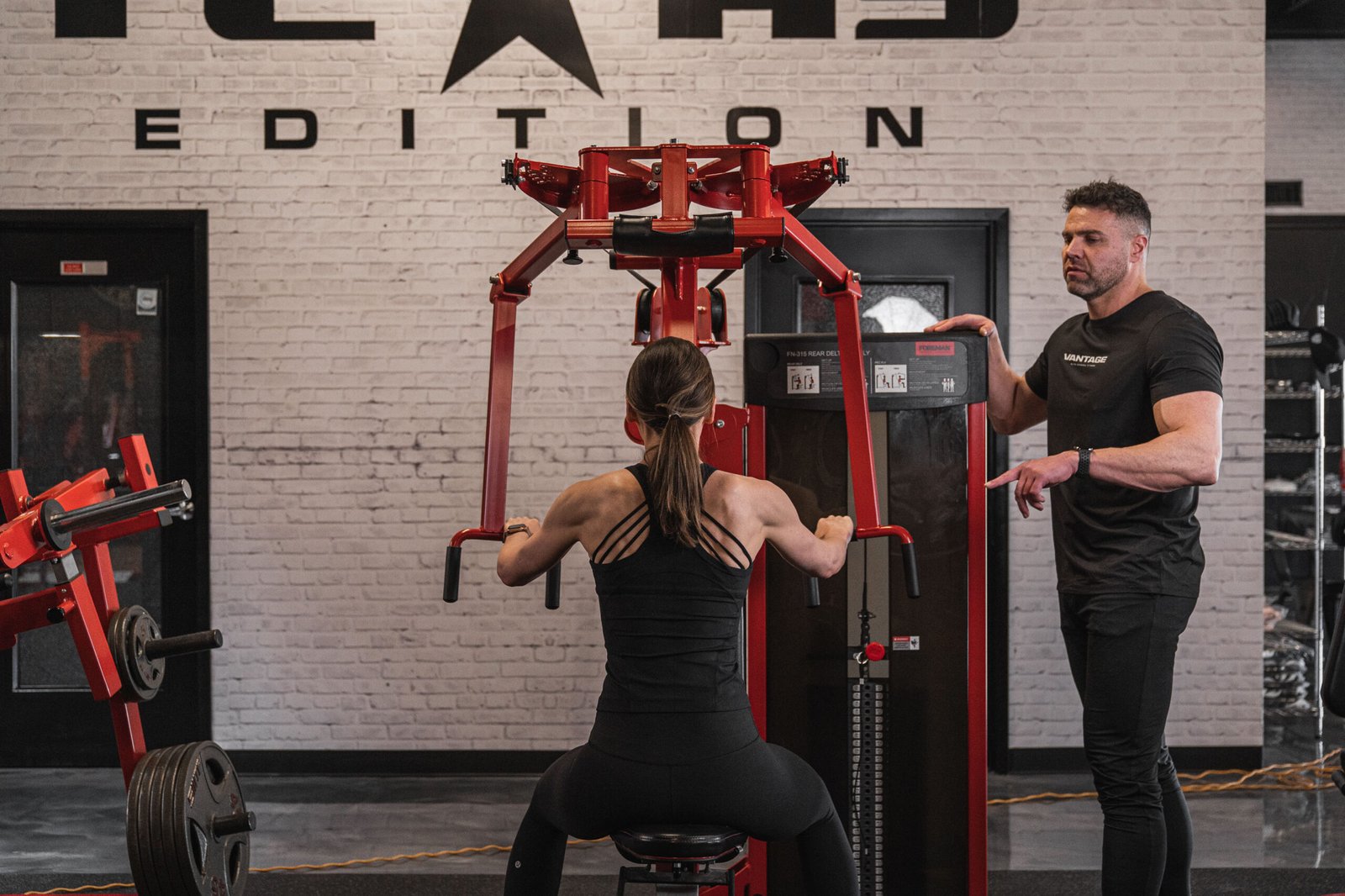
A skilled trainer assesses your movement patterns, identifies your specific needs, and designs a progressive program tailored to your body. They adjust your nutrition based on your response, keeping you in the sweet spot between progress and sustainability. They hold you accountable during the inevitable difficult weeks when motivation wanes.
Most importantly, they give you the confidence that the process works—even when the scale isn’t moving as fast as you’d like.
Ready to Start Your Body Recomposition Transformation?
If you’re tired of choosing between fat loss and muscle building, body recomposition offers a third path. It’s not the fastest route, but it’s the most sustainable—and it delivers the transformation most people actually want.
At Vantage Elite Fitness, we specialize in body recomposition strategies tailored to your body, your goals, and your life. Our trainers understand the science, but more importantly, they understand how to apply it consistently so you see results.
Your first step is a complimentary Pilot Strategy Session. We’ll assess your current fitness level, explore your goals, and design a personalized body recomposition plan with a specific timeline for achieving your results.
No obligation. No hard sell. Just clarity and a roadmap toward the physique you’re working toward.
Schedule Your Free Pilot Strategy Session Today
Body Recomposition FAQ
Is body recomposition realistic for women? Absolutely. Women build muscle and lose fat through body recomposition just as effectively as men. The process is identical—the timeline might be slightly longer due to hormonal differences, but the strategy and results are equally valid.
Can I do body recomposition while training for a specific sport? Yes. In fact, body recomposition often improves athletic performance. You’re building strength and power while reducing excess body weight, making you faster and more powerful without sacrificing muscle.
What if I have a slow metabolism? Metabolism varies less than people think. A calorie is a calorie regardless of metabolism speed. If progress stalls, adjust your deficit downward slightly or increase your training volume. The fundamentals still apply.
How much should the scale move during body recomposition? Expect 0.5-1.5 lbs of loss per week. If the scale isn’t moving after 2-3 weeks, decrease calories by 100-150 or increase training volume. If you’re losing more than 1.5 lbs per week, your deficit might be too aggressive.
Can I do body recomposition indefinitely? Most people can sustain body recomposition for 12-16 weeks effectively. After that, progress often slows. Taking a brief maintenance phase (eating at calorie balance) before returning to a deficit can reset progress.
What if I plateau? Plateaus are normal. Your body adapts. Solutions include increasing training volume, adjusting macros, adding a new exercise, or taking a brief deload week. Plateaus aren’t failure—they’re signals to adjust your approach.
Vantage Elite Fitness specializes in body recomposition strategies that deliver sustainable results. Whether you’re looking to lose fat, build muscle, or transform your body composition, we create personalized plans with proven results.