
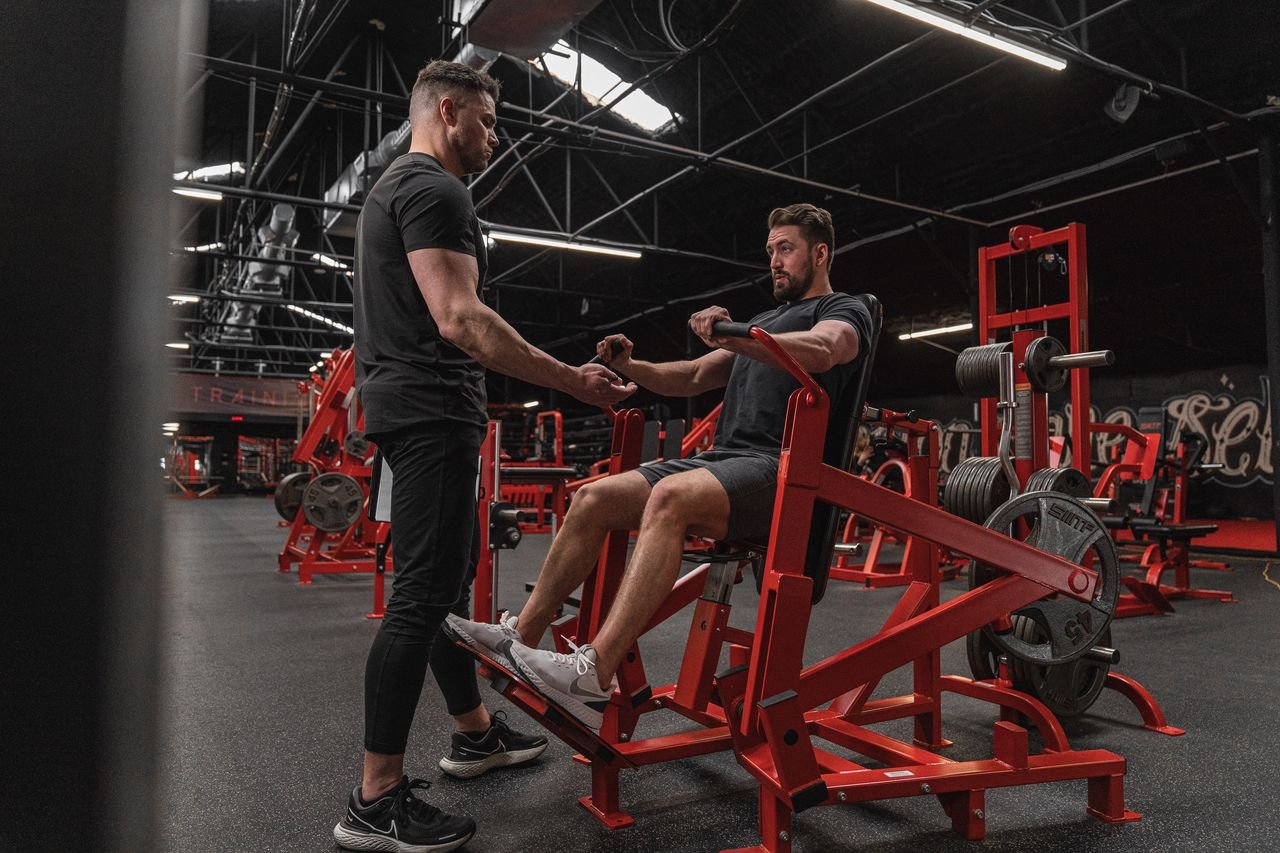
When people think about hiring a personal trainer, one of the first questions that usually comes to mind is simple:
“Is it worth the money?”
It is a fair question.
You can find workouts online for free. You can watch exercise tutorials on YouTube. You can download fitness apps. You can follow programs created by influencers. You can walk into a commercial gym and use the equipment without paying for one on one coaching.
So why would someone spend money on a personal trainer?
The answer is that you are not really paying someone simply to stand next to you while you exercise.
You are paying for something much harder to find.
Experience.
You are paying for someone who understands how to turn a goal into a training strategy, how to evaluate your starting point, how to recognize problems in your program, how to adjust when progress slows, and how to help you make better decisions throughout the process.
That distinction matters.
Because the value of a personal trainer is not measured by how many exercises they can show you.
It is measured by how effectively they can help you navigate the thousands of decisions that exist between where you are now and where you want to be.
The Internet Gives You Information. A Trainer Gives You Direction.
We live in an age where fitness information is everywhere.
You can search for the best exercises for your chest.
You can search for the best workout to lose belly fat.
You can search for the best number of sets for muscle growth.
You can search for how many days per week you should train.
You can search for what to eat before a workout.
You can search for what supplements you should take.
The problem is that access to information does not automatically give you the ability to apply it correctly.
In fact, having too much information can create another problem.
Confusion.
One fitness expert says you should train three days a week.
Another says five.
One program recommends heavy weights.
Another uses lighter weights.
One person tells you to train to failure.
Another tells you to stop several repetitions before failure.
One program tells you to change your exercises every week.
Another tells you to keep the same exercises for months.
The information may sound contradictory, even when different approaches can all have a place depending on the individual and the goal.
The American College of Sports Medicine’s 2026 position stand on resistance training reviewed 137 systematic reviews involving more than 30,000 participants and found that resistance training improves strength, muscle size, power, endurance, and several measures of physical function. The review also found that different training variables can influence different outcomes, reinforcing the importance of matching training decisions to the desired result.
The challenge is not finding information.
The challenge is knowing which information matters for you.
That is where coaching comes in.
A Personal Trainer Is Not Just an Exercise Instructor
There is a major difference between someone showing you how to perform an exercise and someone responsible for helping you develop a training strategy.
An exercise instructor might show you how to perform a squat.
A personal trainer should also be thinking about why you are squatting, how the movement fits into your program, what your current ability is, what you are trying to improve, and how the exercise should progress over time.
That requires a much broader understanding of training.
A trainer may need to consider your:
Current Fitness Level
Your starting point determines what makes sense next.
A beginner who has never followed a structured resistance training program may require a very different approach from someone who has been lifting consistently for ten years.
Training History
What you have already done matters.
If you have been performing the same exercises for months, your trainer needs to understand how your body has responded before deciding what should happen next.
Goals
Building muscle, losing body fat, improving strength, changing body composition, and improving general fitness can require different approaches.
Schedule
A program has to fit the amount of time you can realistically commit.
The best program on paper is not useful if you cannot consistently follow it.
Recovery
Training is only one part of the equation.
Your sleep, nutrition, stress, workload, and overall lifestyle can all affect how you respond to training.
Progress
Your program should respond to what is actually happening.
If you are progressing, the strategy may need to continue or advance.
If you are not progressing, something may need to change.
This is what separates coaching from simply handing someone a workout.
You Are Paying for Someone Who Knows What to Change
One of the biggest benefits of having a trainer is not knowing what to do.
It is knowing what to do when the original plan stops working.
This is where many people struggle when training alone.
They start a program.
They make some progress.
Eventually, progress slows.
Instead of evaluating why, they search for another workout.
Then another.
Then another.
They change exercises.
They change rep ranges.
They change training frequency.
They try a new diet.
They buy another supplement.
They start over.
Months can pass without ever identifying the actual problem.
A trainer can approach that situation differently.
Maybe the issue is not the exercise.
Maybe the issue is training volume.
Maybe the issue is recovery.
Maybe the exercise needs to be modified.
Maybe the progression strategy needs to change.
Maybe the client is progressing, but the wrong metric is being used to evaluate progress.
The ability to identify the problem is part of the value.
Expertise Can Save You From Guessing
Think about other areas of life where you hire professionals.
You do not hire an accountant because you are incapable of using a calculator.
You hire one because financial decisions can become complicated.
You do not hire a mechanic because you are incapable of looking at a car.
You hire one because identifying the actual problem can require experience.
You do not hire an attorney because you cannot read.
You hire one because understanding how to apply complicated information is different from simply having access to it.
Fitness can work in a similar way.
You can find the information.
You can find the exercises.
You can find the equipment.
But applying everything correctly to your individual situation is a different skill.
That is one of the reasons professional coaching has value.
The Cost of Making the Wrong Decisions
The price of training alone is not necessarily zero.
You may not be paying a trainer, but you are still investing something.
Your time.
Your energy.
Your membership.
Your equipment.
Your nutrition.
And potentially months of effort.
If your training strategy is ineffective, the biggest cost may not be the money you spent.
It may be the time you cannot get back.
Imagine spending six months training consistently but never properly progressing your program.
Imagine spending another six months jumping between different routines because you are unsure which one is working.
Imagine repeatedly starting over because you never developed a sustainable process.
The financial cost of those decisions can be difficult to calculate.
The time cost is much easier to understand.
You cannot recover six months.
You cannot recover the workouts you performed without knowing whether they were contributing to your goal.
That is why the value of a trainer should not be measured only by the price of a session.
It should also be considered in relation to the value of having a better process.
You Are Paying for Feedback You Cannot Give Yourself
When you train alone, you have a built in problem.
You are the athlete.
You are also the coach.
That means you have to perform the exercise while simultaneously evaluating your own performance.
You have to decide whether your technique is correct.
You have to determine whether your weight is appropriate.
You have to judge whether you should increase the load.
You have to decide whether you are recovering properly.
You have to determine whether your current program is still appropriate.
That is difficult to do objectively.
A trainer provides another set of eyes.
They can observe your technique while you focus on performing the movement.
They can compare your current performance with previous sessions.
They can identify changes in movement quality.
They can notice when fatigue begins affecting your form.
They can determine when an exercise should be modified.
That feedback can be difficult to replicate when you are training completely alone.
You Are Paying for Progressive Programming
Doing the same workout repeatedly is not the same as following a progressive training program.
Progressive training requires a plan for how the stimulus changes as your ability improves.
That does not necessarily mean simply adding more weight every session.
Progress can involve changes in resistance, repetitions, sets, exercise selection, range of motion, technique, training frequency, or other variables depending on the objective.
Research on progressive overload has also highlighted an important point: simply accumulating more training volume does not automatically guarantee greater muscle growth. The relationship between training volume and adaptation is more complicated than simply doing more and more work.
That is important because it challenges one of the most common assumptions in fitness:
More training does not automatically equal more results.
A good trainer understands that progression needs to be purposeful.
The goal is not to make every workout harder for the sake of making it harder.
The goal is to create an appropriate stimulus that supports the client’s objective.
You Are Paying for Accountability, But Accountability Is Only Part of It
Accountability is often one of the first benefits people associate with personal training.
And it matters.
When someone is expecting you to show up, complete the session, and follow through with the plan, it becomes harder to continually postpone your training.
But accountability by itself is not the entire value of personal training.
Imagine having someone who makes sure you show up but has no idea what you should actually be doing.
You would have accountability without direction.
Now imagine having a perfect program but nobody checking whether you are following it.
You would have direction without accountability.
Personal training combines both.
The trainer can help you follow the plan while also evaluating whether the plan itself needs to change.
That combination is powerful because the process becomes dynamic.
You are not simply being told to work harder.
You are being guided through the process.
You Are Paying for a Training System
The most valuable personal training relationships are not simply a collection of individual workouts.
They are a system.
The system begins with understanding the client.
Then comes assessment.
Then programming.
Then execution.
Then measurement.
Then adjustment.
Then progression.
At Vantage Elite Fitness in Dallas, the process begins with discovering the client’s goals, timeline, habits, personal history, starting measurements, and current fitness level. The initial benchmark is used to evaluate foundational movements, muscle balance, and limitations before developing a personalized training and nutrition strategy.
That means the workout is only one part of the process.
The bigger picture is the strategy surrounding the workout.
Why the Difference Matters for Busy Dallas Professionals
For someone with a demanding career, time becomes one of the most valuable resources.
You may already have work commitments.
You may have family responsibilities.
You may travel.
You may have unpredictable days.
You may have only a limited number of hours available each week for training.
That makes guesswork expensive.
If you only have three or four hours available for exercise each week, you want those hours to have a purpose.
This is one reason Vantage Elite Fitness positions its personal training around customized programming and flexible scheduling for Dallas professionals. Its private Dallas Design District facility is designed around one on one coaching rather than the typical commercial gym environment.
The goal is not simply to get you into the gym.
The goal is to make your training fit into your life while still giving the process structure.
BOOK YOUR FREE PILOT SESSION NOW
What Happens When You Have an Expert in Your Corner?
The biggest change may be psychological.
Instead of constantly wondering whether you are doing the right thing, you have a process.
Instead of searching for another workout, you have a program.
Instead of guessing whether you should increase the weight, you have someone monitoring your progression.
Instead of abandoning the plan when progress slows, you have someone who can evaluate what happened.
Instead of comparing yourself to random people online, you can focus on your own measurements and performance.
You still have to work.
A trainer cannot perform the workout for you.
You still have to make decisions outside the gym.
You still have to be consistent.
But you do not have to figure out every part of the process by yourself.
That is the real difference.
The Value of Personal Training Goes Beyond the Hour You Spend in the Gym
A personal training session may last an hour.
But the value of the session can extend beyond that hour.
The trainer is helping determine what you should be doing between sessions.
They are helping establish what you should measure.
They are helping determine when your program should progress.
They are helping you understand your training.
They are helping you avoid unnecessary changes.
They are helping you make decisions based on your actual progress instead of whatever fitness trend happens to be popular this week.
That is why looking only at the hourly price of a personal training session can miss the bigger picture.
You are not simply purchasing sixty minutes.
You are purchasing expertise that influences the decisions surrounding those sixty minutes.
What Makes a Personal Trainer Worth the Investment?
Not every trainer will be the right fit for every person.
A valuable trainer should be able to do more than demonstrate exercises.
Look for someone who can:
Understand Your Goal
Your trainer should know exactly what you are trying to accomplish and why.
Assess Your Starting Point
A good program should be based on where you are now rather than where someone else’s program says you should be.
Build a Structured Plan
Your workouts should have a purpose and fit into a larger strategy.
Teach and Correct Technique
You should understand how to perform movements effectively and safely.
Track Your Progress
Your trainer should have a way to determine whether the program is working.
Adjust the Program
Your training should evolve as your body, schedule, and goals change.
Communicate With You
Good coaching is not simply telling you what to do. It also involves listening to feedback and understanding what is happening outside the gym.
Keep the Bigger Picture in Mind
Training is one part of a broader fitness strategy that can include nutrition, recovery, lifestyle, and consistency.
Personal Training Is an Investment in Better Decisions
There is a temptation to think that the value of a personal trainer comes from motivation.
But motivation is only one piece.
The bigger value can come from better decisions.
Better exercise selection.
Better programming.
Better progression.
Better technique.
Better use of time.
Better adjustments.
Better understanding of your own progress.
When those decisions compound over weeks and months, they can influence the entire training experience.
That is what makes professional coaching different from simply having access to a gym.
Frequently Asked Questions About the Value of a Personal Trainer
Is hiring a personal trainer worth the money?
The answer depends on the individual, their goals, available time, experience, and need for professional guidance. People can make progress independently, but a personal trainer can provide structure, feedback, accountability, and individualized programming that may be valuable for someone who wants professional support.
What am I actually paying for when I hire a personal trainer?
You are paying for more than the workout itself. The service can include assessment, programming, exercise instruction, progression planning, performance tracking, accountability, and adjustments based on your response to training.
Can I get the same information from YouTube?
You can find an enormous amount of useful fitness information online. The difference is that online information is generally created for a broad audience, while a personal trainer can apply training principles to your specific goals, abilities, schedule, and progress.
Do experienced gym goers need a personal trainer?
Not necessarily, but experienced gym goers can still benefit from professional programming, objective feedback, technique analysis, progression planning, and another perspective when they reach a plateau or have a highly specific goal.
Will a personal trainer guarantee that I get results?
No qualified professional should guarantee a specific outcome. Results depend on many factors, including training, nutrition, recovery, consistency, individual response, and adherence. A trainer’s role is to provide a structured strategy and help you make informed adjustments throughout the process.
How do I know if I am getting value from my personal trainer?
You should understand what you are working toward, how your progress is being measured, why your program is structured the way it is, and how your training changes as you improve. Communication and a clear process are important parts of a productive coaching relationship.
Vantage Elite Fitness: Expert Coaching for People Who Want a Better Process
You can find a workout anywhere.
You can download an app.
You can watch a video.
You can search for a program.
But information is not the same thing as expertise.
The real challenge in fitness is taking all of that information and deciding what actually applies to you.
What should you do?
What should you avoid?
What should you measure?
When should you progress?
When should you change your approach?
What happens when you stop progressing?
Those are the questions that make professional coaching valuable.
At Vantage Elite Fitness in Dallas, personal training is built around individualized programming, one on one coaching, accountability, and ongoing adjustments. The company describes its approach as fully customized and centered around the client’s specific goals, with a private training environment in the Dallas Design District.
You are still responsible for doing the work.
But you do not have to figure out the entire process alone.
If you have been spending months trying different workouts, searching for answers, and wondering whether you are actually doing the right things, it may be time to stop collecting more information and start working with a strategy built around you.
BOOK YOUR FREE PILOT SESSION NOW
Because the right coach does more than give you a workout.
They help you understand what to do, why you are doing it, and what needs to happen next.